
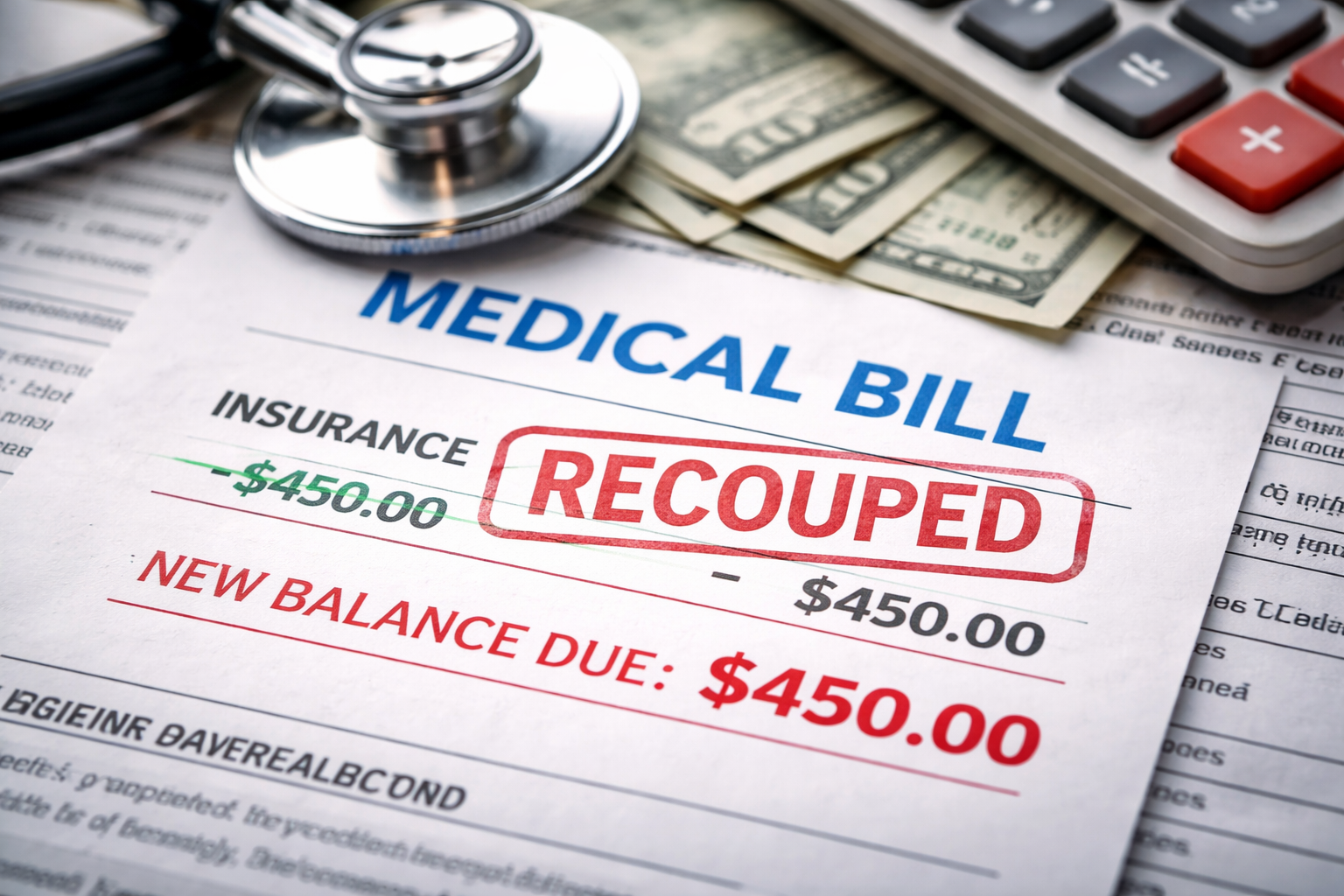
Medical bill adjusted after insurance recoupment demand was not a phrase I expected to learn from experience. I noticed it the morning I opened a billing email that looked routine, clicked into the patient portal, and saw a balance that had no business being there. The visit had already moved through insurance. The provider had already shown the claim as processed. I had already stopped worrying about it. Then suddenly, the amount due came back as if the account had quietly been reopened while I was not looking.
What made it worse was how normal everything looked on the surface. Same date of service. Same provider. Same patient account. No obvious correction notice. No plain-language explanation. Just a number that had increased after the matter seemed finished. That is what makes medical bill adjusted after insurance recoupment demand so frustrating. It does not begin like a loud dispute. It begins like a settled account that quietly turns unstable again.
Medical bill adjusted after insurance recoupment demand usually means the system did not simply make a typo. It means money that had already moved from insurer to provider was later pulled back, reduced, or offset. Once that happens, the provider’s billing system often rebuilds patient responsibility from the revised payment history, and the balance that reappears can look new even though the service itself is old.
If you want the broader framework for how billing mistakes and post-resolution problems develop, this is the closest hub to read first:
Why this feels different from an ordinary insurance adjustment
Medical bill adjusted after insurance recoupment demand is not the same as a basic repricing update that appears a few days after a claim is first processed. In a normal adjustment flow, the claim is still moving toward a final number. Here, the account often looked final already. Insurance paid. The provider posted the payment. The patient may have paid the remaining amount or seen a zero balance. Only later does the insurer decide that all or part of the prior payment should be taken back.
That late reversal creates a second financial event. The provider no longer sees the original payment as fully available. The ledger changes, the responsibility is recalculated, and the patient gets hit with a bill that feels disconnected from the original timeline. This is why people describe it as being billed twice, even when the system insists it is only “updating responsibility.”
What usually happens inside the system
Medical bill adjusted after insurance recoupment demand typically follows a backend chain like this:
- The provider submits the claim and receives payment.
- The payment is posted to the patient ledger.
- The balance is lowered, resolved, or closed.
- The insurer later audits the claim, reclassifies part of it, or offsets a prior payment.
- The provider receives notice that the prior payment has been reduced, taken back, or netted against another amount.
- The provider’s billing team or system reposts the account based on the updated insurance amount.
- A new patient balance appears, often without a clear narrative explanation.
That sequence matters because it changes how you should respond. If you assume the provider simply made an entry mistake, you may argue with the wrong target. If you assume the insurer must be right because the provider rebilled you, you may pay too early. Medical bill adjusted after insurance recoupment demand sits in the gap between those two assumptions.
The most common recoupment paths
1) Overpayment review after the claim looked finished
The insurer later decides it paid too much. This can happen because of code review, contract interpretation, bundling logic, modifier review, or a system audit. The provider loses part of the payment and rebills the patient for the difference.
2) Network status corrected after payment
The claim may have been processed under the wrong contract status at first. Later, the insurer determines the provider should not have been paid at the in-network level. The patient portion rises sharply.
3) Medical necessity or documentation review
The insurer pays first, then later questions whether all lines were supported. Instead of denying the entire visit upfront, it claws back part of the money later. The patient suddenly sees line-item responsibility that did not exist before.
4) Coordination issue with another plan
The wrong payer order may have been used. Once corrected, the original insurer recoups the payment. The provider then moves the balance back to the account while waiting for the correct payer or the patient.
5) Offset against another provider balance
Sometimes the insurer does not literally demand cash back from the provider for that exact claim. Instead, it offsets the amount through later payments. But the provider still updates your account as if the money vanished from the original claim.
The critical point is that the patient often sees only the last step, not the chain that caused it.
How providers usually see this
From the provider side, medical bill adjusted after insurance recoupment demand is often treated as an account correction, not a dispute event. The billing office may tell you the insurer changed the allowed amount, reversed prior payment, or reassigned responsibility. To them, the balance is not “new”; it is the account finally reflecting the insurer’s latest position.
That perspective explains why front-line billing staff can sound indifferent. They may not be ignoring you. They may be looking at a ledger that now shows an unpaid amount and treating it like any other collectible balance. The system often strips away the emotional logic of the situation. You remember a resolved bill. They see an updated receivable.
This is also why you should ask for more than a verbal summary. You need the revised EOB, the adjustment history, and the itemized account trail. Without those, you are being asked to trust the final output without seeing the inputs.
How to tell whether this is really a recoupment problem
Medical bill adjusted after insurance recoupment demand is more likely when several of these signs appear together:
- The original claim had already been paid or marked complete.
- Your old statement or portal history showed a lower balance or zero balance.
- The new balance appeared weeks or months later, not a few days later.
- The insurer’s updated EOB shows reduced payment, reversal language, recovery language, or revised patient responsibility.
- The provider cannot clearly explain the change in plain English and keeps referring to “insurance update” or “reprocessed claim.”
- The new amount resembles money insurance had already paid before.
If those clues line up, do not treat this like a normal first-pass billing issue. Medical bill adjusted after insurance recoupment demand needs a timeline comparison, not just a balance check.
Detailed situation check you can apply to yourself
If your new balance is small:
Do not assume it is harmless. Small recoupments are easier to pay and forget, but they can signal a coding or coverage logic issue that may repeat on later visits.
If your new balance matches a prior insurance payment:
That strongly suggests the insurer paid, then took money back. Ask for the exact date the original payment posted and the exact date it was reversed or offset.
If the provider says the claim was “reprocessed”:
Ask whether that means a repricing, a denial, a payment recovery, an offset, or a corrected payer order. Those are not the same thing.
If the insurer says they already explained it on the EOB:
Request the revised EOB in writing and compare it to the earlier one. The difference between the two documents often tells the whole story.
If collections is already mentioned:
Request a temporary hold while you verify the recoupment basis. Waiting silently is risky because the account may move before the facts are clear.
What to ask the provider and insurer, in the right order
Medical bill adjusted after insurance recoupment demand becomes harder to fix when people ask broad questions like “Why is this bill wrong?” Instead, ask targeted questions.
Ask the provider:
- What was the original insurance payment amount?
- On what date was that payment posted?
- Was that payment later reversed, reduced, or offset?
- What exact adjustment code or note caused the patient balance to increase?
- Can you send the itemized ledger history for the date of service?
Ask the insurer:
- Was there a recoupment, recovery, offset, or post-payment review?
- Why was prior payment changed after the claim was already processed?
- What amount is now considered patient responsibility, and why?
- Was this based on coding, network status, documentation, or coverage rules?
- Can you send the revised EOB and any appeal instructions?
When both sides are forced to answer in dates and dollar amounts, vague explanations tend to fall apart quickly.
If the issue feels like a resolved matter suddenly reopened, this related article helps frame that pattern:
Mistakes that make this harder to fix
Medical bill adjusted after insurance recoupment demand often gets worse because patients make understandable but costly moves:
- Paying the rebill immediately just to stop the stress
- Arguing only with the provider and never confirming what the insurer actually changed
- Assuming the insurer cannot revisit a paid claim
- Failing to save earlier portal screenshots, old statements, or original EOBs
- Ignoring the account because the rebill seems obviously unfair
The worst trap is paying without understanding the basis, then trying to unwind it later. Once the account shows patient payment, some offices become less motivated to investigate deeply because the receivable problem is already solved from their side.
Your rights and safe next steps
Medical bill adjusted after insurance recoupment demand does not mean you have to accept the provider’s latest number without question. You can ask for supporting records, dispute incorrect responsibility, and request time to review before the balance escalates. In many situations, you can also ask the provider to pause collection activity while the insurer’s revised position is verified.
For official federal guidance on medical billing protections and dispute-related rights, use the Centers for Medicare & Medicaid Services resource here: Medical Bill Rights
Do three things immediately:
- Pull the original and revised EOBs
- Request the provider ledger for the specific date of service
- Ask for a temporary hold on collection activity while you review the change
Do not let the account age into a collections workflow before you understand whether the recoupment was valid.
FAQ
Why did my bill go up after insurance had already paid?
Because the insurer may have later recovered, reduced, or offset its earlier payment, causing the provider to repost the account.
Is this the same as a retroactive denial?
Not always. A retroactive denial is one path, but recoupment can also come from overpayment review, network correction, documentation review, or payer-order changes.
Can the provider bill me again after showing a zero balance?
Yes, that can happen if the prior insurance payment is later changed and the provider updates patient responsibility accordingly.
Should I pay first and appeal later?
Usually not until you understand exactly why the balance changed. It is safer to verify the basis first, especially if the new amount comes from a post-payment recovery.
Can this still go to collections?
Yes. That is why you should request a hold while investigating instead of assuming the balance will pause automatically.
Key Takeaways
- Medical bill adjusted after insurance recoupment demand usually means the claim was paid first and changed later.
- The rebill often reflects money the insurer took back from the provider, not a simple typo.
- You need both the revised EOB and the provider’s ledger history to understand the change.
- The right response is a timeline-based review, not a quick payment or a vague complaint.
- Early action matters because unresolved rebills can still move into collections workflows.
What to read next
If your account is starting to look unstable even after prior payments were posted, these are the most useful next reads from your site structure:
This one is the closest supporting article if the balance keeps changing after insurance activity:
And if you are worried about what happens when an unresolved billing issue starts moving toward escalation, read this next before it gets harder to contain:
Medical bill adjusted after insurance recoupment demand is one of those problems that makes people feel like the system is rewriting history. In a way, it is. A payment that once existed in the account is being pulled back out of the story, and the patient is left trying to understand why the ending changed after the file already looked closed.
Do not treat that as a minor annoyance. Treat it as a signal that the financial record was reopened after the fact. Pull the revised documents today. Ask for the ledger today. Request the hold today. The faster you force both sides to explain the change in dates, codes, and dollars, the better your chance of stopping a bad balance from turning into a bigger problem.