
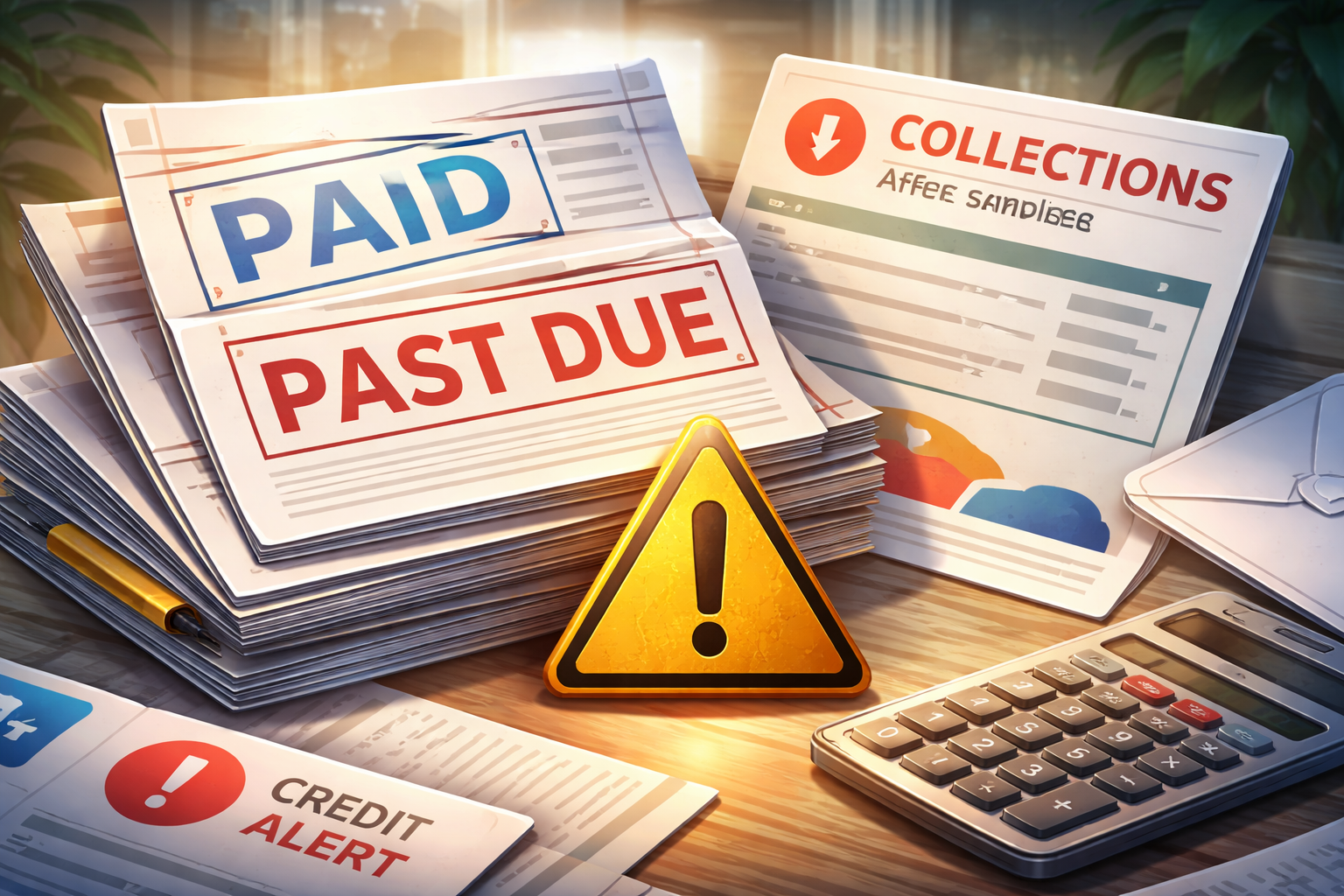
Billing Dispute Marked Resolved but Balance Still Sent to Collections was the last thing you expected to deal with after finally seeing the word “resolved” on your account. For a moment, it probably felt like the problem was over. You opened the portal, saw the dispute was closed, maybe even saw a note that the charge had been adjusted, and thought you could move on. Then the letter, email, text, or credit monitoring alert showed up. Suddenly the same balance you thought had been corrected was now being treated like a collection problem.
Billing Dispute Marked Resolved but Balance Still Sent to Collections usually feels less like a normal billing mistake and more like the company changed its story after the fact. That is why this situation is so stressful. You already did what the system asked you to do. You disputed the charge. You waited. You got the status update. What most people do not realize is that a billing dispute can be marked resolved in one workflow while a separate collections workflow keeps moving in the background. That gap is where real damage starts, especially if nobody stops it quickly.
If you want a broader map of how these billing failures happen across consumer accounts, start here before you assume your situation is unique:
Why this happens after a dispute looks finished
Billing Dispute Marked Resolved but Balance Still Sent to Collections happens because companies often use more than one system to manage the same account. The dispute team may work inside one platform. The billing ledger may sit in another. Delinquency aging, account flags, and collections exports may be handled by a separate rules engine or by a third-party service. When those systems do not update at the same time, the account can show one status to a customer and a very different status internally.
In plain terms, “resolved” does not always mean “everything downstream stopped.” Sometimes it only means the dispute review is over. It does not always mean the balance was recalculated correctly. It does not always mean the aged receivable flag was removed. It does not always mean a scheduled collections batch was canceled. That is why a resolved dispute can still turn into a collections problem even when the consumer did nothing wrong after the dispute closed.
Billing Dispute Marked Resolved but Balance Still Sent to Collections is especially likely when the account was already close to a collections threshold before the dispute was decided. If the balance was aging toward 30, 60, or 90 days delinquent, the collections side may already have been set in motion while the dispute was still under review.
What the company often sees on its side
Support representatives are often confused in this situation because their screen may not show the full chain of events. One agent may see that the dispute was resolved and the adjustment posted. Another team may see that the account was previously queued for collections. A third-party agency may only see a file that was already sent out, without any later correction attached to it.
That creates several ugly but common internal states:
- The dispute status says resolved, but the billed balance never re-aged correctly.
- The credit or adjustment posted, but only after the collections export file was created.
- The original creditor fixed the account internally, but never sent a recall notice to the collection agency.
- The balance was reduced, but a fee, tax amount, or prior-cycle charge kept the account above the collections trigger.
- The customer portal updated faster than the back-office collections workflow.
Billing Dispute Marked Resolved but Balance Still Sent to Collections is often the result of timing, not logic. The system is not asking whether the account is fair. It is processing whether an aging rule, export schedule, or balance threshold was triggered before the correction caught up.
How to identify your exact version of the problem
Version A — The dispute was resolved before collections, but the export still happened
This usually means the dispute team closed the issue, but the collections batch had already been scheduled and was not canceled. In this version, the account may still be recoverable very quickly if the creditor sends a same-day recall.
Version B — The dispute was resolved after the account had already been placed with collections
In this version, the original company may believe the issue is fixed, but the collection agency still treats the balance as active until it gets direct notice to stop. This is where many consumers get stuck because each side tells them to call the other.
Version C — The balance was adjusted, but not fully cleared
A partial credit may have posted, but a remaining balance, late fee, prior charge, or service fee kept the account technically delinquent. This often happens in medical, utility, telecom, and subscription billing where multiple line items age separately.
Version D — The portal says resolved, but the ledger never changed
This is one of the worst versions because the status message gives you false reassurance. The dispute note may be customer-facing only, while the real ledger balance remains untouched.
Version E — A third-party collector is acting on stale data
The original provider may have corrected the account internally, but the collector is still using an older file. Unless the collector gets an updated instruction, collection calls, letters, or reporting may continue.
If your situation looks like Version B or Version E, waiting quietly is usually a mistake. Those versions tend to continue until somebody forces a documented update.
The moments when this problem gets worse
Billing Dispute Marked Resolved but Balance Still Sent to Collections becomes more dangerous when the consumer assumes the word “resolved” is enough protection by itself. It is not. The most damaging phase is the period after the dispute closes but before all systems agree on what the account now looks like.
That risk becomes higher when:
- the account was already late before the dispute started
- the company uses an outside agency for collections
- the correction happened close to statement close or month-end processing
- the adjustment involved insurance, credits, reversals, or partial reallocations
- the charge belonged to a bundled account with multiple services or multiple dates of service
This is why some consumers see a bizarre sequence: dispute resolved, then collections notice, then a support agent saying everything looks fine, then another collection letter anyway. Each event may be technically consistent inside a different system, even though the overall result is obviously wrong.
What you should gather before calling anyone
Billing Dispute Marked Resolved but Balance Still Sent to Collections is much easier to fix when you control the timeline instead of speaking from memory. Before you contact the provider or collector, pull together a simple evidence file.
- Screenshot of the dispute status showing “resolved”
- Date the dispute was opened
- Date the dispute was marked resolved
- Any email or chat confirming an adjustment, reversal, or correction
- The first collections letter, email, or notice
- Any account statement showing the disputed amount
- Proof of payment if you already paid a corrected amount
The goal is to show one clean timeline: disputed, resolved, then wrongly sent to collections. That timeline gives the company less room to send you in circles.
What to say to the original provider
Start with the original company, not the collection agency. Ask for a supervisor or a billing escalation team if the first-line agent only reads the current balance. You need them to confirm three things in writing:
- that the dispute was resolved
- that the balance in question should not have remained collectible after resolution
- whether the account was exported, assigned, or referred to collections and on what date
Then ask a direct question: “Has a recall or withdrawal been sent to the collection agency?” Do not settle for vague language like “it should update” or “it may take some time.” Ask whether the company has actually transmitted a stop or recall instruction.
If you need a companion article for the stage where a dispute seems closed but the account status still looks wrong, this is the most relevant internal follow-up:
What to do if collections already contacted you
Billing Dispute Marked Resolved but Balance Still Sent to Collections requires separate action with the collector once you know the original provider’s position. Send the collector a short written dispute with copies of the resolution evidence. Tell them the underlying balance was resolved before or after transfer and that you are requesting suspension and correction based on inaccurate account status.
Do not assume a phone call alone is enough. Documentation matters because collectors may rotate agents, and verbal conversations disappear fast. If the original creditor agrees the balance should not be in collections, ask them to send confirmation directly to the agency and to you.
According to the Consumer Financial Protection Bureau, consumers can dispute inaccurate debt collection information and inaccurate credit reporting information, and furnishers and reporting companies have duties to investigate and correct errors when the information is wrong or incomplete. See the official CFPB guidance here: Consumer Financial Protection Bureau.
Mistakes that can quietly lock in the damage
There are several moves that feel practical in the moment but often make this worse.
- Ignoring the collection notice because the portal says resolved
- Paying the collector first just to make the stress stop without confirming the account status
- Accepting “wait a few billing cycles” without written proof of a recall
- Talking only to collections and never forcing the original provider to acknowledge the system failure
- Focusing on the status word “resolved” instead of the actual ledger, balance, and referral date
The biggest mistake is assuming the back-end systems will eventually fix themselves. Sometimes they do. Many times they do not. And by the time the consumer realizes that, a collection trade line or additional fees may already be in play.
If the balance changed after the dispute, check for this too
Sometimes the real problem is not only the collections referral. Sometimes the adjustment itself was later changed, reversed, or re-posted in a way that created a second imbalance. If your account history looks inconsistent, review this related issue as well:
Key Takeaways
- Billing Dispute Marked Resolved but Balance Still Sent to Collections usually means more than one workflow touched the account.
- A resolved dispute does not always cancel a collections referral that was already queued or exported.
- The word “resolved” matters less than the actual balance, export date, and recall status.
- You need written proof from the original provider and a documented dispute with the collector.
- The fastest fixes usually happen when the original provider sends a direct recall or withdrawal notice.
FAQ
Can an account really be resolved and still go to collections?
Yes. That can happen when the dispute status updates in one system while a separate collections process keeps moving.
Should I only call the collection agency?
No. The original provider is the key source because they control whether the account should have been referred in the first place.
Will this fix itself if I wait?
Sometimes, but that is risky. If a referral already happened, waiting can allow the problem to spread into credit reporting or additional fees.
Do I need written proof even if the agent says it is handled?
Yes. Written proof is what protects you when the next agent, next team, or outside collector says they do not see the same thing.
What if the company says the dispute is resolved but there is still a small balance?
Then you need a line-by-line explanation. A dispute can be resolved without fully eliminating every charge, and that leftover amount may be what triggered collections.
What to do next before more damage happens
If you are still in the middle of escalation and need a step-by-step path for pushing a billing issue higher, use this before the matter gets bounced between teams again:
Billing Dispute Marked Resolved but Balance Still Sent to Collections does not mean you failed to handle the dispute correctly. In many situations, it means the company resolved one part of the problem but failed to stop another workflow that was already moving. That is why this situation feels so irrational. It is not one clean mistake. It is an unfinished chain reaction inside the billing system.
Billing Dispute Marked Resolved but Balance Still Sent to Collections should be treated as urgent the moment you see it. Contact the original provider first, demand written confirmation of the dispute outcome, ask whether a recall was sent to collections, and then notify the collector with your documentation. Do not leave this sitting in the hope that the status will eventually sync on its own. The safer move is to force the correction now, while the paper trail is still clear and before the account causes deeper reporting problems.