
Water bill meter error dispute is the exact phrase I typed into my notes the moment I saw the new statement. The “current read” jumped like someone turned on a fire hydrant in my kitchen. I stared at the total, then at the billing period dates, then back at the total again—same result. It didn’t feel like “I used more water.” It felt like “the meter read is wrong.”
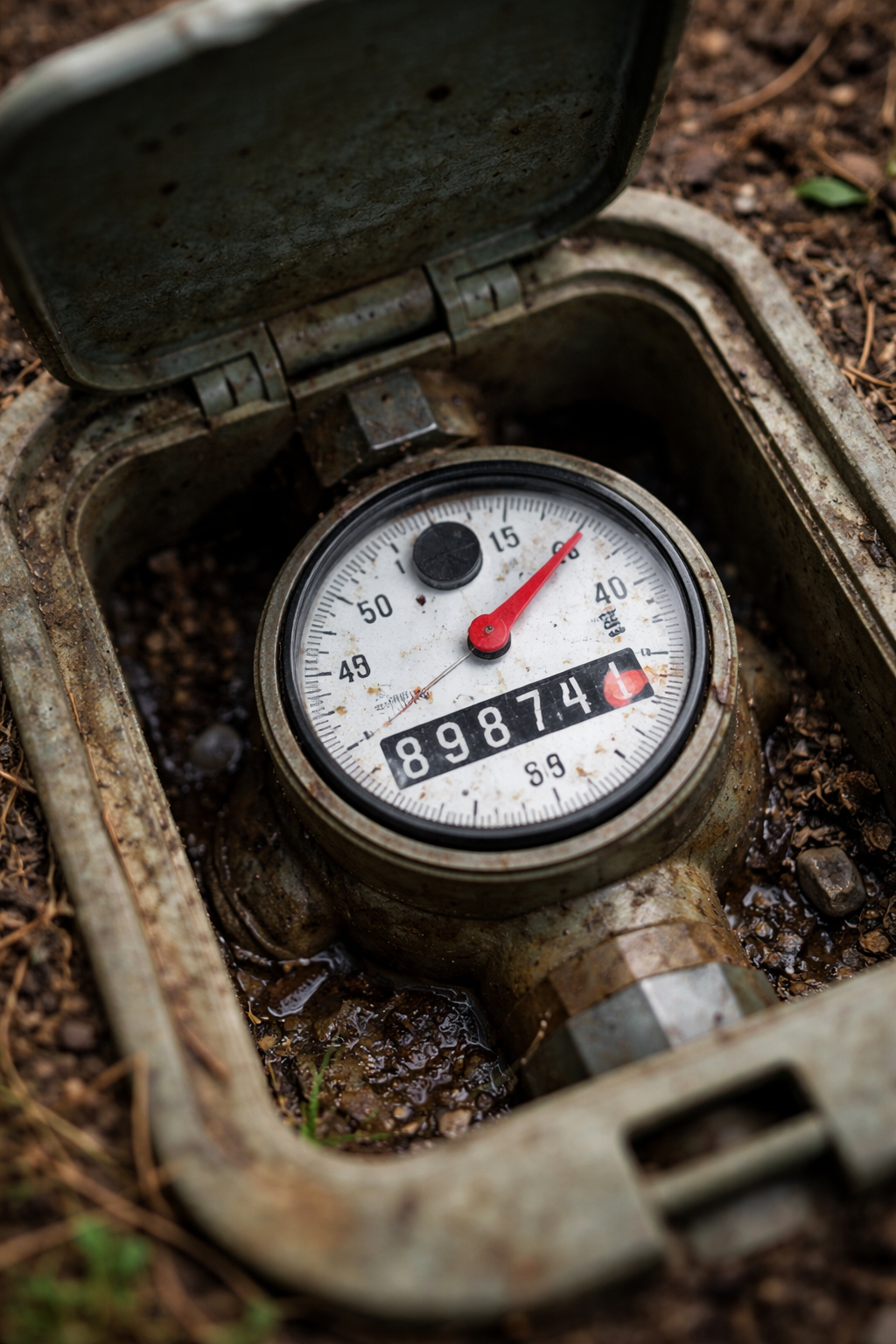
So I did what most people don’t do until it’s too late: I walked outside with my phone, found the meter box, wiped off the cover, and took a photo of the meter reading with a timestamp. Right there, I decided this would be a water bill meter error dispute, not a vague complaint. No drama, no rant—just proof, the right requests, and the right escalation steps.
Important: This guide is general consumer information for U.S. residents (not legal advice). Utility rules vary by city/county/provider, so treat this as a practical playbook you adapt to your local process.
Do this in the first 15 minutes (before you call)
- Photograph the meter clearly (include the full face + surrounding box if possible). If your phone allows, keep location data on.
- Photograph your bill page that shows previous read, current read, usage, dates, and “estimated/actual” language.
- Write down three numbers: previous read, current read, and the number on your meter right now.
- Check the billing type: does the bill say “estimated,” “actual,” “adjustment,” “re-read,” “back-bill,” or “catch-up”?
- Look for an obvious leak signal: if all faucets are off, is the small flow indicator moving? If yes, pause and check your leak-related guide later—don’t assume meter error.
If your bill shows an “estimated” read and the estimate was high, you can often fix this faster than a full investigation. But if the bill shows an “actual” read that doesn’t match your photo, you’re in true water bill meter error dispute territory.
The most common meter-error patterns utilities see
- Digit misread: a single digit transposed (e.g., 12874 vs 13874) creates a huge jump.
- Meter/account mismatch: your bill is tied to the wrong meter serial number (happens after replacements, renovations, or multi-unit confusion).
- Meter swap between neighbors: rare, but real—especially after construction or service work.
- Multiplier/units error: some systems convert units (gallons, cubic feet, CCF, HCF). A wrong multiplier can inflate usage.
- Remote transmitter/AMR/AMI glitch: the radio read is wrong even if the physical meter face is fine.
- Catch-up billing: months of under-reading/estimated bills get “trued up” at once. That can be legitimate, but it must be explained and calculated correctly.
- Roll-over/threshold confusion: certain meter types “roll” digits; a reader unfamiliar with it can record the wrong value.
This matters because a strong water bill meter error dispute is not “my bill is too high.” It’s “the recorded read or conversion is inconsistent with the meter evidence.” That’s a different conversation, and it usually gets routed differently inside the utility.
What the utility will assume (and how to stay credible)
Most front-line reps are trained to start with the most likely explanation: leaks, seasonal use, guests, irrigation, running toilets. That’s not them dismissing you—it’s their script because it solves many cases quickly.
Your job is to keep the call anchored to verifiable facts:
- “My bill shows a current read of ____.”
- “My photo today shows the meter reading is ____.”
- “That means the billed read is ahead/behind by ____ units.”
- “I’m requesting a re-read and a usage recalculation based on a verified read.”
When you can state the mismatch in one sentence, you stop sounding like a ‘high bill complaint’ and start sounding like a ‘meter read discrepancy.’ That distinction is the heart of a water bill meter error dispute.
Your rights (practical version) and what to request
Exact rights vary, but most U.S. utilities have some version of these processes:
- Bill explanation: you can request an explanation of how usage was calculated (reads, dates, units, tiers, adjustments).
- Re-read / field verification: you can request someone verify the meter reading or validate the remote read against the physical meter.
- Meter test (sometimes with a fee): many utilities allow a meter accuracy test; fees may be refunded if the meter is out of tolerance.
- Dispute/appeal path: a documented complaint ticket number, review period, and supervisor escalation.
- Payment options while under review: some utilities allow partial payment, a hold on shutoff, or a payment plan while the dispute is pending (ask explicitly).
Key wording to use: “I’m opening a water bill meter error dispute and requesting a verified read (photo attached) and a recalculation.”
A call script that actually works (copy/paste)
Opening: “Hi—my name is ____. I’m calling about my water account ____. I need to open a water bill meter error dispute because the billed meter reading does not match the meter reading I photographed today.”
Proof line: “The bill shows previous read ____ and current read ____. My photo today shows the meter is at ____.”
Direct request: “Please create a ticket and schedule a verified re-read or a validation of the remote read against the physical meter. I also need the usage recalculated based on the verified reading.”
Process lock-in: “What is the ticket number? What’s the expected timeline? And what happens to due dates/late fees while this is under review?”
Protection request: “If possible, I’m requesting a temporary hold on collections/shutoff while the water bill meter error dispute is investigated. If you can’t do that, what’s the safest partial payment amount to avoid penalties?”
Close: “Where can I upload photos, and to whose attention should they be attached? Please note in the ticket that I have meter photos and the billed read appears inconsistent.”
Tip: Ask the rep to read back the meter serial number on file and compare it to the serial on your physical meter. A mismatch can end the dispute fast.
Case-branch (pick your situation)
CASE A — Bill says “Estimated”
Do this: Provide an actual meter read + photo and request an “estimate correction.” Ask whether the utility can rebill immediately using your submitted read. If they require a field visit, ask for the earliest date and whether they can mark the account as “pending review” to avoid penalties.
CASE B — Bill says “Actual” but your meter photo is lower
This is classic water bill meter error dispute territory. Ask for a re-read and confirm the read date/time on the bill. If the “actual” read date is after your photo (rare), it may be real usage; if it’s before your photo, the billed read being higher than your current meter is a red flag for misread/mismatch.
CASE C — Your meter reading is higher, but usage is still weird
Ask for the unit conversion details (gallons vs CCF/HCF) and the exact formula/tier calculation. Sometimes the read is right but the conversion multiplier or tier assignment is wrong—still a valid water bill meter error dispute, just a different fix.
CASE D — Multi-unit / landlord / submeters
Request documentation showing which meter serves your unit and how allocation is done. If a third-party billing company is involved, request a written meter-to-unit mapping. If you suspect meters were swapped, ask for a site verification.
CASE E — Utility says “Meter is fine, must be a leak”
Don’t argue. Ask for the meter test option and written results, and separately do a leak isolation test (toilet dye test, shutoff observation, irrigation off, look for continuous movement). If it’s a leak, you may need a different dispute path (adjustment/forgiveness programs vary).
One sentence that keeps you in control: “I’m happy to check leaks too, but first we need to reconcile the billed read with the meter evidence—this is a water bill meter error dispute based on a documented mismatch.”
What to submit (so your dispute doesn’t stall)
- Meter photo(s): at least one clear shot; two shots a few hours apart helps show whether the meter is moving.
- Bill screenshot: page showing reads, dates, and usage.
- Short written summary (5 lines): mismatch amount + what you are requesting.
- If relevant: move-in date, meter replacement date, construction date, or any utility work order notes.
Keep your written summary boring. Boring wins. A calm, documented water bill meter error dispute gets processed faster than an emotional story.
Mistakes that backfire (don’t do these)
- Waiting until after the due date to open the ticket. Open it as soon as you see the issue.
- Only saying “bill too high” without pointing to the read mismatch.
- Threatening to stop paying before you know your utility’s shutoff/fees policy. Instead, request safe partial payment guidance.
- Forgetting to ask for a ticket number. No ticket number = no timeline.
- Assuming remote read = truth. Remote systems fail; you’re allowed to request validation against the physical meter.
If you do only one thing today: take the meter photo and open the water bill meter error dispute ticket while your evidence is fresh.
One authoritative resource
If you want a credible framework for how water billing disputes are discussed in affordability and dispute-resolution contexts, this toolkit section is a solid reference to skim. It’s not a “step-by-step for your city,” but it helps you ask better questions and document the process.
Use it like this: pull 2–3 questions from the document (estimated vs actual reads, dispute path, repayment options) and ask your utility directly during your water bill meter error dispute call.
Related guides (recommended next reads)
These are the closest matches on your site that help you branch correctly without mixing topics:
1) If the bill is high but you’re still confirming the cause:
This helps you separate “real usage spike” from “reading/estimate/adjustment” patterns before you escalate.
2) If you suspect a leak is the real driver (and you need the right dispute angle):
Use this when the meter shows continuous movement even when everything is off.
3) If you want a parallel meter-reading mindset (useful for talking to utilities):
Different utility, same logic: verify the read, document proof, request re-read/test, escalate with a ticket number.
FAQ
How many times should I call before escalating?
If you have a documented mismatch, one good call with photos + a ticket number is usually enough to start. If you don’t get a timeline, escalate on the same call: “Can I speak with a billing supervisor handling meter discrepancies?”
Should I pay the full bill while the dispute is open?
Ask the utility what protects you best from late fees/shutoff while the water bill meter error dispute is pending. Some allow partial payment, some require current charges, some place a temporary hold—don’t guess.
What if they say the meter tested ‘accurate’?
Then the issue may be (a) a leak, (b) a unit conversion/multiplier mistake, or (c) an account/meter mapping issue. Ask for the written test result and confirm the meter serial number on your account matches the physical meter.
Can a remote transmitter be wrong even if the meter is fine?
Yes. That’s why you request validation of the remote read against the physical meter face during a water bill meter error dispute.
What if I live in an apartment with shared water billing?
Request the allocation method in writing (submeter read, ratio utility billing system, fixed formula). If you suspect a mapping error (wrong unit), request a site verification and written meter-to-unit mapping.
Key Takeaways
- A strong dispute is about a measurable mismatch, not a feeling that the bill is high.
- Start with photos: meter read + bill read + dates. Then open a ticket.
- Use exact requests: re-read/verification, recalculation, and written timelines.
- Ask how to avoid penalties during review—don’t assume you should “just not pay.”
- If leak signs appear, switch to a leak-focused path; if mapping/units look wrong, push for an audit of serial numbers and conversions.
When I finally hung up, the most important thing wasn’t the rep’s tone or the hold time. It was that I had a ticket number, a promised follow-up date, and my photos attached to the case. That’s the moment the story changes from “I’m upset” to “we’re investigating a documented discrepancy.”
Right now, do the same: take the meter photo, open the water bill meter error dispute, get the ticket number, and ask what payment action protects you while the investigation runs. Those four steps are how you stay calm—and get a real correction instead of a generic explanation.