
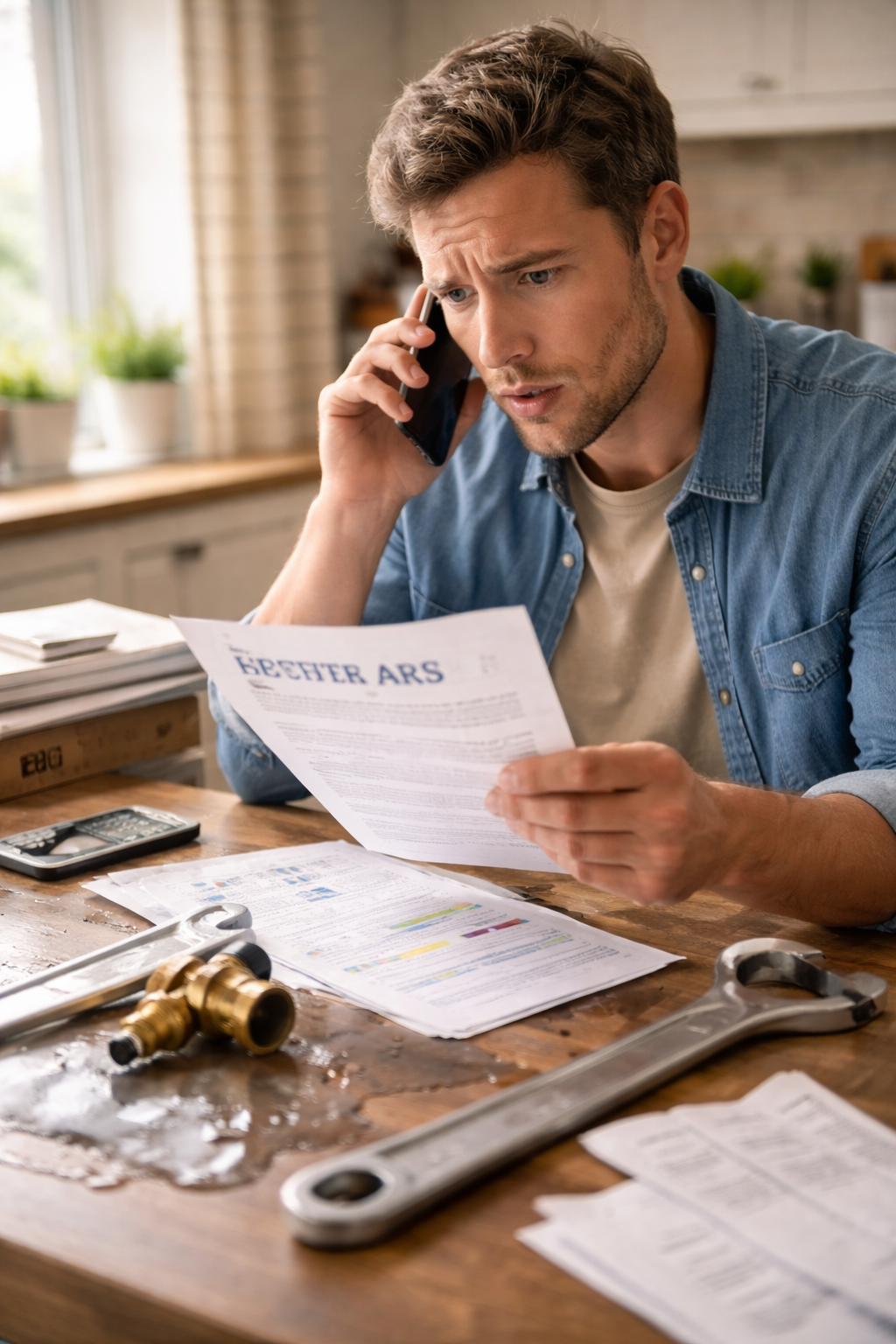
water bill leak charge dispute was the phrase I typed with one hand while holding my phone in the other, staring at a bill that looked like it belonged to someone else. Same house. Same month. But the usage number was so high I reread it three times, hoping I was just misreading a decimal.
I didn’t slam my laptop shut or freak out. It was worse than that—quiet, practical panic. The due date was close. Autopay was on. And the first thought wasn’t “How did this happen?” It was: If I pay this without asking questions, will I ever see that money again?
This guide is built for the exact moment you’re in: you suspect a leak, the charges are already real, and you need a dispute plan that doesn’t create new problems while you’re trying to solve this one.
If your problem looks like “a sudden spike and no clear reason,” this related guide can help you compare how utilities investigate abnormal usage:
Fast Self-Check
Before you call anyone, do this quick check so you stop guessing:
- Look at the billing period dates (not just the statement date).
- Compare usage to the same month last year if you can.
- Check your meter (or the utility portal) for the most recent read type: actual vs estimated.
- Listen for the quiet signs: toilet running, water heater drip pan, soft hiss behind a wall.
If the bill is due in the next 7–10 days, your first goal is to pause financial damage while you gather proof.
Why This Happens (System, Not “Bad Luck”)
Most people assume a leak means a dramatic burst pipe. In reality, the leaks that create the worst bills are often boring:
- A toilet flapper that never seals fully
- An irrigation valve stuck open at night
- A slow underground line leak between meter and house
- A water softener or humidifier line that fails quietly
Then the system does what it’s designed to do: it measures volume and bills it. That’s why water bill leak charge dispute is not about convincing the utility you “didn’t use water.” It’s about proving the spike is linked to an abnormal event and asking for the adjustment process your provider already has (even if they don’t advertise it clearly).
What the Provider Cares About
When you contact a water provider, your story matters less than your timeline and documentation. Their decision usually comes down to:
- Was the usage recorded as an actual read?
- Is there evidence of a leak and a repair date?
- Is this a one-time spike or a repeated pattern?
- Did the customer act promptly after discovering the issue?
The earlier you report and document, the more “reasonable” your request looks in their internal notes. That internal note is what gets reviewed if you escalate.
Your Rights (Without Turning This Into Legal Advice)
You’re not asking for a favor—you’re asking for a review. In most areas, utilities must provide a way to dispute charges, explain readings, and correct proven errors. Even when the usage was “real,” many providers have leak adjustment policies or one-time courtesy credits.
water bill leak charge dispute works best when you treat it like a case file, not a rant. Your rights are strongest when your request is specific:
- Request the meter read details and read type (actual vs estimated).
- Request a re-read or meter test if the reading seems impossible.
- Request the leak adjustment/credit policy if a leak is confirmed and repaired.
What you want is a documented review trail. That trail protects you if the first representative says “we can’t do anything.”
Case Breakdown (Long Block)
This is the part that separates a winning dispute from a frustrating phone loop. Find your case and follow the matching path.
- Case A: Leak is inside the house (toilet, faucet, appliance line)
Your best evidence: a plumber invoice or repair receipt, dated photos, and a short log of what you found. Ask the provider what proof they accept for an adjustment. If you repaired it yourself, keep receipts for parts and take clear “before/after” photos. - Case B: Leak is between the meter and the home (yard/underground line)
This is where bills get huge. Ask for: (1) usage history, (2) confirmation of meter read type, and (3) the provider’s leak adjustment policy for service line leaks. Document the repair date and the contractor details. Providers often care about whether the leak was repaired quickly after discovery. - Case C: No leak found, but the bill is still extreme
Push for read verification. Ask if the reading was estimated, if there was an access issue, or if there was a catch-up read after months of estimates. Request a meter test if your usage is wildly inconsistent with household reality. Keep your request calm and specific: “Please verify the read and advise the process for a meter accuracy test.” - Case D: You rent (landlord vs tenant responsibilities)
Start with the lease and utility responsibility. Notify the landlord in writing immediately. If the leak is in a wall or service line, you need documented notice dates. Your strongest position is: ‘I reported promptly and requested repair’. Ask the provider whether they will communicate with the account holder (often the landlord) and what documentation is needed for an adjustment. - Case E: The leak is fixed, but the bill is already past due
Don’t wait. Ask for a temporary hold, payment arrangement, or due-date extension while the dispute review is pending. Then submit your evidence package. In a water bill leak charge dispute, timing is the difference between “reviewed” and “denied for late submission.”
What to Do Today (Step-by-Step)
If you only follow one part of this article, follow this. This sequence prevents the two biggest failures: paying too fast and disputing too vaguely.
- Step 1: Stop the leak first
If you haven’t confirmed the leak, do basic checks today (toilet dye test, shutoff test, meter movement). If it’s severe, call a plumber. Evidence is stronger when it includes the first day you confirmed the issue. - Step 2: Build a simple evidence packet
Include: the bill, prior bill comparison, photos, repair invoice/receipts, and a one-paragraph timeline (discovery date → repair date). This makes your request easy to process. - Step 3: Contact the provider and request the correct process
Use these phrases: “billing dispute,” “meter read verification,” “leak adjustment policy,” and “temporary hold while under review.” Mention that the leak has been repaired (if true) and offer documentation. - Step 4: Ask for the adjustment rules, not a promise
Say: “Please tell me the criteria for a leak adjustment and how to submit documentation.” That forces a procedural answer instead of a quick rejection. - Step 5: Submit in writing even if you called
Phone calls disappear. A written submission creates a record. Save confirmation numbers and names.
At this point, you’re no longer “complaining.” You’re running a water bill leak charge dispute like a documented request.
Mistakes That Get Disputes Denied
- Paying immediately with autopay and never creating a dispute record
- Calling without documentation, then getting told to “send proof” later
- Submitting a long emotional explanation instead of a clean timeline
- Not asking whether the read was estimated vs actual
- Waiting until the next bill to “see if it fixes itself”
The most expensive mistake is delay. Providers often have windows for leak credits or dispute review.
One Trusted Place to Escalate (If You Need Guidance)
If you don’t know where to escalate a complaint beyond the company or you need help finding the correct consumer protection path for your state, this official government guide is a solid starting point. It helps you locate complaint routes without relying on random forums.
water bill leak charge dispute escalations work best when you can show you already tried the provider’s process first and kept documentation.
Recommended Reading
These are the closest matches on this site that help you handle the same “prove it + document it + escalate calmly” style of disputes:
If your dispute also includes a billing error layer (duplicate charges), this can help you structure evidence:
If your payment posted wrong or “disappeared,” handle that separately before you negotiate adjustments:
Key Takeaways
- Win fast by documenting early: discovery date, proof, repair date.
- Ask for read verification (actual vs estimated) and the leak adjustment policy.
- Submit your dispute in writing even if you started by phone.
- Don’t let autopay erase your leverage—create a dispute record immediately.
FAQ
Should I pay the bill first and dispute later?
Sometimes partial payment is smart to avoid late fees, but paying in full without a dispute record can reduce urgency. The safer approach is to ask for a temporary hold or payment arrangement while your review is pending.
What if I fixed the leak myself?
Still document it: receipts for parts, dated photos, and a short written timeline. Many providers accept non-plumber proof if it’s clear and consistent.
What if the provider says the usage is “real” so nothing can be done?
Ask for the leak adjustment policy and the criteria. Even when usage is real, some providers offer one-time credits or adjustments after repairs.
How do I know if the meter reading was wrong?
Start by asking whether it was an actual read or an estimate. If it was an estimate, a later catch-up read can create a shocking spike. If it was an actual read and still impossible, ask about a meter accuracy test.
Is this the same as disputing an electric bill?
The structure is similar (evidence, read verification, written dispute), but water disputes often hinge on leak proof and repair timing. That’s why water bill leak charge dispute needs its own playbook.
When I first saw the total, I wanted a simple answer—something like “call this number and it disappears.” That’s not how it works. What works is calmer: collect the proof, ask the right procedural questions, and create a written record.
Right now, do one thing that changes your outcome: today, start the dispute in writing with a short timeline and your evidence packet, and ask specifically for meter read verification and the leak adjustment policy. That’s how you turn a scary bill into a fixable case—without blaming yourself for a leak you didn’t even know existed.