
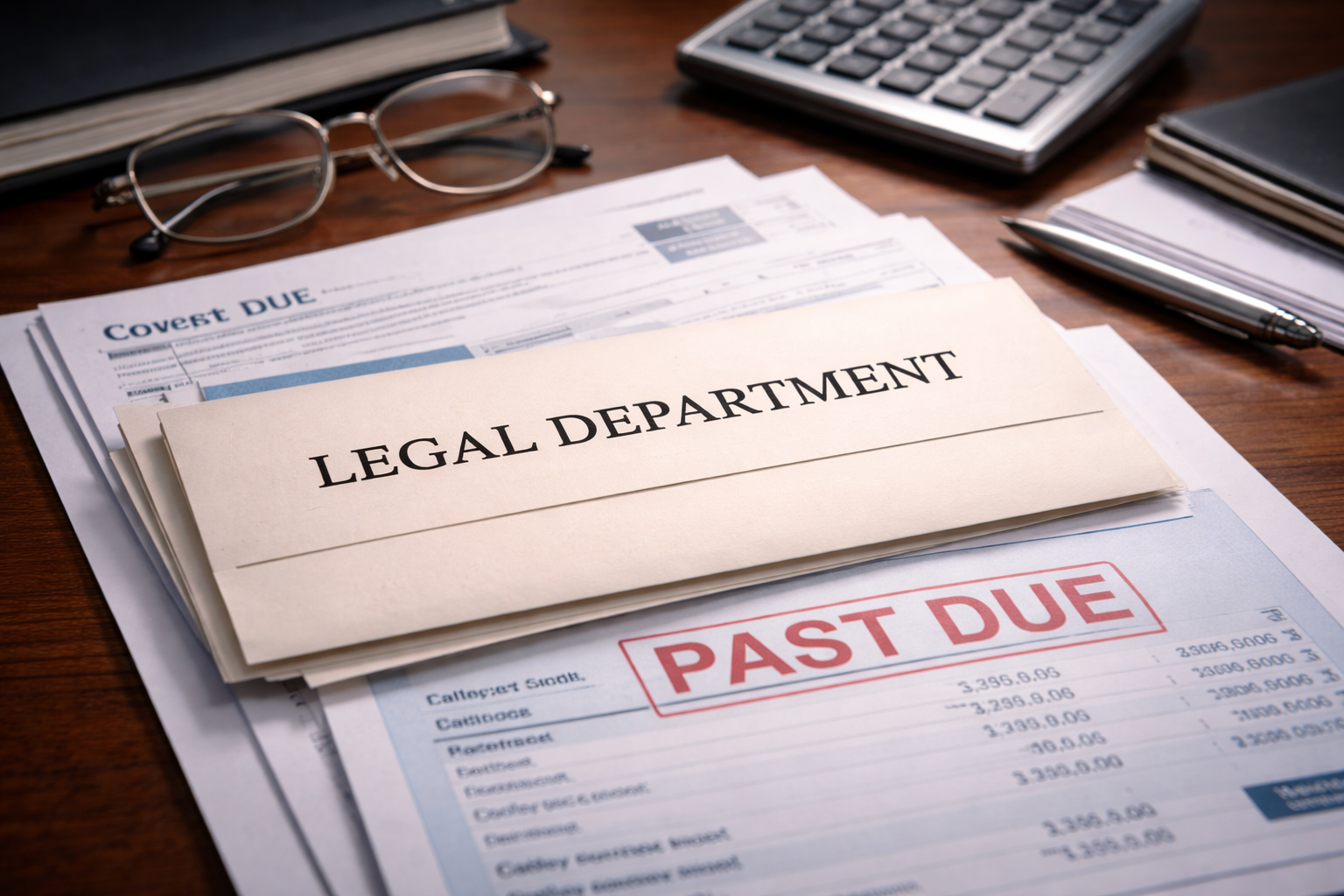
Utility Bill Referred to Legal Department Before Collections was the phrase that stopped me mid-step. I had opened the mail expecting another generic late notice, the kind you toss aside while thinking, “I’ll handle it after payday.” This one didn’t read like that. It read like someone had already decided what happens next.
I wasn’t dealing with a credit card or a loan. This was a U.S. utility account — the kind tied to real life, real services, and real consequences. And the moment I saw Utility Bill Referred to Legal Department Before Collections, I realized the conversation had moved from “customer service” to “enforcement workflow.”
If you’re at this stage, you still have room to fix it — but the room is smaller than you think.
What This Notice Usually Means
Utility Bill Referred to Legal Department Before Collections is typically an internal status change, not an external event. It means the provider’s billing system routed your account out of routine collections messaging and into a legal/recovery review queue.
That queue exists for a reason: once Utility Bill Referred to Legal Department Before Collections is triggered, the provider can prepare the account for one or more downstream actions such as third-party placement, credit reporting preparation, or civil recovery review — depending on the provider type (municipal utility vs. private utility).
This is often the last stage where a well-documented response can keep the issue inside the provider instead of outside.
To understand why some accounts get escalated and others don’t, the closest system-level hub on your site is this internal trigger guide:
Why Billing Systems Escalate to Legal Before Collections
Most U.S. utility billing platforms use a rule engine that looks at more than “days past due.” Utility Bill Referred to Legal Department Before Collections often happens when multiple risk signals stack at the same time. Common combinations include:
- Balance aged past a defined threshold (often 60–120 days)
- Service address changes or move-out timing disputes
- Returned payments, reversals, or autopay failures
- Prior dispute history marked “unresolved”
- Multiple partial payments without a formal plan
- High balance compared to normal usage history
Providers do this because legal review is where they verify enforceability and compliance. In other words: Utility Bill Referred to Legal Department Before Collections is frequently the provider’s “quality control checkpoint” before they let the account leave the building.
The Reality Check: What Your Provider Sees
At this stage, your provider is looking at a dashboard, not your story. When Utility Bill Referred to Legal Department Before Collections appears, the internal screen often shows:
- Current balance, aging bucket, and delinquency stage
- Last payment date and method
- Promise-to-pay notes (if any)
- Disconnection notices sent
- Dispute flags or “hold” flags
- Eligibility for outside placement
Your goal is to turn your situation into verifiable records that change what that dashboard shows.
Pick the Path That Matches You
Branch 1 — You already paid, but the account still escalated
Utility Bill Referred to Legal Department Before Collections can trigger when a batch referral runs before your payment posts or clears. This happens most often with ACH transfers, bill-pay, or payments made near cutoff time.
Do this today: gather your receipt, bank confirmation, and reference number. Ask for a “posting audit” and request confirmation that the legal referral status will be updated after reconciliation.
If your issue involves cutoff timing, this is the closest matching guide:
Branch 2 — Autopay failed, but your bank shows funds were sent
Utility Bill Referred to Legal Department Before Collections can occur when the provider’s payment gateway rejects a debit while the bank still shows an outgoing transaction pending or completed. The two systems don’t always reconcile on the same timeline.
Do this today: request the provider’s payment rejection code and the payment processor trace details. Then send your bank proof and request a temporary pause on outside placement.
Branch 3 — You disputed the bill (meter, leak, overcharge), and escalation happened anyway
This is where Utility Bill Referred to Legal Department Before Collections can be most frustrating. Many utilities do not auto-pause delinquency while a dispute is “open” unless a specific hold code is applied.
Do this today: request confirmation of the dispute status and ask whether an administrative hold was ever applied. If not, request it in writing and ask the legal queue to pause placement while the hold is active.
If your account is already on a hold (or should be), this is the closest matching scenario:
Branch 4 — Service was disconnected even though you paid
Utility Bill Referred to Legal Department Before Collections can show up right after a disconnect event if the system believes the payment was late, reversed, or applied incorrectly.
Do this today: request a payment allocation report and ask which service period the payment was applied to. Incorrect allocation can make a paid account look delinquent.
Branch 5 — The balance is real, but you can’t pay it all at once
Utility Bill Referred to Legal Department Before Collections is still negotiable in many providers if you propose a realistic plan. The key is how you frame it: not a vague promise, but a structured schedule.
Do this today: propose an amount you can actually sustain, a start date, and a method (ACH, online portal). Ask for written confirmation that outside placement will be paused while the plan is active.
Branch 6 — You moved, and the final bill doesn’t match what you expected
Move-out timing issues can trigger Utility Bill Referred to Legal Department Before Collections because “final bills” are often re-rated, re-read, or adjusted after a later meter read posts. That can create a surprise delinquency even after you believe the account is closed.
Do this today: request a final-bill breakdown by service dates and ask whether the account was re-billed after closure. If so, request copies of the adjustment transactions.
Pick the branch that matches your facts and follow that path. Utility Bill Referred to Legal Department Before Collections is not fixed by one generic script — it’s fixed by matching the workflow that triggered it.
What to Request (Copy This Checklist)
When Utility Bill Referred to Legal Department Before Collections appears, you should request specific records. This is the fastest way to move from “explanations” to “resolutions.”
- Itemized ledger with all charges, credits, reversals, and fees
- Payment posting log showing posted date vs received date
- Payment allocation report showing which period your money was applied to
- Escalation timeline showing when legal review was triggered
- Any hold codes applied (or not applied) during disputes
- Outside placement schedule (is it pending, approved, or already transmitted?)
Don’t ask, “Can you help?” Ask, “Can you provide these records?” Utility Bill Referred to Legal Department Before Collections becomes solvable when you have what the provider’s own system relies on.
Consumer Rights You Can Use Without Escalating the Situation
You don’t need to be confrontational. You need to be precise. If Utility Bill Referred to Legal Department Before Collections is moving toward a third party, you can request clarity and documentation.
For general rights and documentation expectations in debt collection contexts, the CFPB’s official resource is a reliable reference: Consumer Financial Protection Bureau — Debt collection.
Even before collections, written documentation requests are normal — and often expected.
Mistakes That Quietly Reduce Your Options
- Ignoring the notice because you assume it’s “just wording”
- Making a token payment without written terms (it may not stop placement)
- Relying on phone calls only (no paper trail)
- Assuming an open dispute automatically pauses delinquency
- Waiting until the account is already in collections to request records
Utility Bill Referred to Legal Department Before Collections is the stage where timing matters more than persuasion.
What Happens Next If You Don’t Act
If Utility Bill Referred to Legal Department Before Collections proceeds, the next steps commonly include third-party placement. That can create separate communication channels, added fees, and faster negative outcomes.
If you want to see how “without notice” placements typically play out, read this as your preview of the next stage:
The goal is to stop the handoff before it happens.
FAQ
Does Utility Bill Referred to Legal Department Before Collections mean I’m being sued?
Not automatically. It usually means internal legal/recovery review before outside placement. Lawsuit is possible later in some situations, but many accounts never go that far if handled early.
Can I still negotiate a plan at this stage?
Often yes. This stage is frequently more flexible than after third-party placement because the provider still controls the file.
What if the balance is wrong?
Request itemized ledger, posting log, and allocation report. Many “wrong balance” situations are caused by misapplied payments, reversals, or adjustments posted after a final bill.
Will this hit my credit immediately?
Usually not at the internal legal-review stage. Credit impact is more common after third-party placement or later escalation. That’s why acting now matters.
Should I pay something today just to show good faith?
Only pay if you can get written confirmation that payment will pause outside placement or that it resolves the disputed portion. Otherwise, “good faith” payments can fail to stop escalation.
Key Takeaways
- Utility Bill Referred to Legal Department Before Collections is a real escalation stage, not just scary wording.
- This is often the last internal window to prevent third-party placement.
- Match your response to the trigger: payment timing, autopay failure, dispute hold, move-out rebill, or affordability.
- Ask for records: ledger, posting log, allocation report, escalation timeline, hold codes, and placement schedule.
- Get confirmation in writing before making partial payments or relying on phone promises.
When I first saw Utility Bill Referred to Legal Department Before Collections, I kept re-reading the phrase like it might change. What changed wasn’t the letter — it was my approach. I stopped trying to “explain” and started gathering the exact records that control the provider’s next step.
Do this right now: pick the branch that matches your situation, request the ledger and payment posting records today, and ask in writing whether outside placement is scheduled. Then submit either proof of payment, a dispute hold request, or a structured plan proposal within 48 hours. Utility Bill Referred to Legal Department Before Collections can still be contained — but only if you move before the file leaves the provider.