
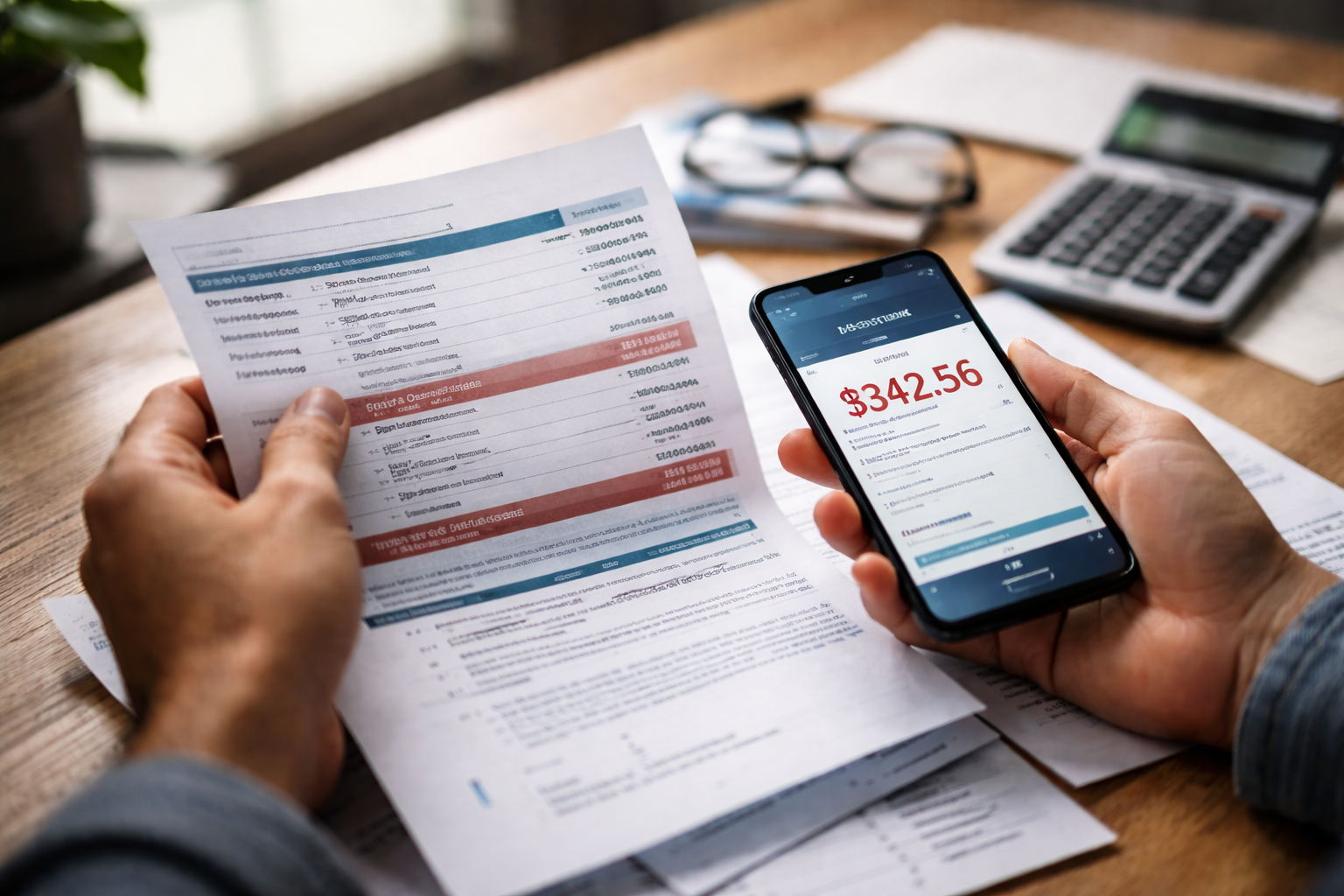
Mobile bill data overage dispute — the moment I saw the total, my first reaction wasn’t anger. It was disbelief. I was holding my phone like it was wrong, like the carrier app had loaded someone else’s account. I scrolled line by line until I found it: “Data Overage.” And it wasn’t one line. It was a stack of them, like the bill had been quietly counting up while I slept.
What made it feel unfair wasn’t just the money. It was the lack of a clear “stop” moment. No obvious warning that matched the size of the hit. No clean choice where I could say, “Yes, I accept this.” When the bill shock is big enough, it stops being a normal customer-service call and turns into a real financial dispute. If you’re in a mobile bill data overage dispute right now, this guide is built to help you act immediately, stay calm, and get the maximum credit you can without burning your leverage.
Quick Self-Check (So You Don’t Argue the Wrong Thing)
Before you call, take two minutes to place yourself in the right lane. The fastest wins come from matching your story to what the billing system can actually adjust.
- Was the overage on one day (a spike) or spread across the month (a slow leak)?
- Was your Wi-Fi unstable or did you travel, commute, or move recently?
- Did you use hotspot (even briefly) for a laptop, tablet, or gaming device?
- Is it a family plan where one line can drain shared data?
- Did you get any alerts and if so, what time did they arrive?
If you can answer those, you are already ahead of most people who start a mobile bill data overage dispute by yelling “I didn’t do this.” That approach usually fails because it’s not specific.
Why Overage Charges “Make Sense” to the System (Even When They Don’t to You)
Carriers meter usage through automated systems that record data sessions, timestamps, and plan thresholds. The system doesn’t think in feelings or fairness — it thinks in units and rates. This is why a dispute has to be framed as one of these:
- Notification failure (alerts were late, missing, unclear, or not enabled when promised)
- Unexpected routing (data used when you reasonably believed you were on Wi-Fi)
- Account control failure (another line or device used data without clear guardrails)
- Plan mismatch (the plan you believed you had doesn’t match billing terms)
- Measurement anomaly (rare, but powerful if evidence supports it)
Your goal is not to “prove the carrier is evil.” Your goal is to show why this charge should be adjusted as a reasonable correction.
Choose Your Case Path
Pick the box that matches your reality. Then follow that script and evidence list. This structure is what makes a mobile bill data overage dispute feel “obviously solvable” to the person who can issue credits.
Case A — One-Day Spike (Streaming, Backup, Updates) You see a huge jump on one date or within a few hours. Often caused by HD streaming, cloud backup, OS updates, or a Wi-Fi drop that no one noticed.
- Best angle: one-time courtesy adjustment + plan protection to prevent recurrence
- Evidence to grab: usage graph for that day, app data usage breakdown, any Wi-Fi outage notes
- Ask for: “courtesy credit,” “first-time adjustment,” “bill-shock credit,” or “overage forgiveness”
Important: Say you want a solution that prevents it happening again (carriers like “future-proof” calls).
Case B — Alerts Were Late or Missing You got the “you’re near your limit” text after you were already over — or you never got it at all.
- Best angle: notification failure undermined informed consent
- Evidence to grab: screenshot of message timestamps, carrier notification settings page, plan terms referencing alerts (if shown)
- Ask for: adjustment tied to “late notice” + add hard limits or data blocks
Key phrase: “I didn’t receive timely notice to make an informed choice.”
Case C — Family Plan Drain (One Line Consumed Shared Data) The bill is yours, but the usage wasn’t only you. A teenager streamed, a spouse hotspotted, or a child’s device ran updates for days.
- Best angle: shared-plan control failure and request for goodwill credit
- Evidence to grab: per-line usage breakdown, device list, hotspot logs if visible
- Ask for: partial credit + set line-level limits + add usage alerts for each line
Keep it practical: You’re not blaming the carrier for your family — you’re requesting an adjustment and stronger controls.
Case D — Unauthorized or Unknown Device Usage You see usage you can’t explain, or your account shows devices you don’t recognize.
- Best angle: security concern + immediate protection + review of the charge legitimacy
- Evidence to grab: device list screenshot, login/security events if available, usage timestamps
- Ask for: fraud/security review, device removal, password reset guidance, and an adjustment while investigated
Act fast: The longer you wait, the easier it is for the carrier to say “it looks normal.”
Case E — “This Doesn’t Match My Plan” (Plan Mismatch or Wrong Feature) Your bill reflects overage pricing that doesn’t align with the plan you believed you had (or a feature like “data safety mode” wasn’t active).
- Best angle: plan discrepancy and correction request
- Evidence to grab: screenshots of plan name/benefits, confirmation emails, prior bills showing different terms
- Ask for: backdated plan correction if applicable, plus credit adjustment
Strong point: “My account history shows I did not agree to these terms at activation/upgrade.”
The 20-Minute Proof Pack (What to Gather Before You Call)
Build a small folder (screenshots are fine). A mobile bill data overage dispute gets easier when you speak in timestamps and plan terms.
- Screenshot of the bill lines that show “data overage” and dates
- Usage graph for the month and for the spike day
- Per-line usage if it’s a family/shared plan
- Any alert messages with timestamps
- Plan details page showing thresholds or “unlimited” wording
- One prior bill showing your normal pattern
Do not over-explain. Show the pattern. Your job is to make the adjustment feel reasonable, not emotional.
What to Say on the Call (Scripts That Keep Leverage)
Open with calm precision. Your first sentence decides how serious the rep takes you.
Script 1 (best all-purpose opener):
“I’m calling about unexpected data overage charges. I want to review the usage timeline and discuss an adjustment based on what I’m seeing in my account records.”
Script 2 (late/missing alert angle):
“The usage alert did not arrive in time for me to make an informed choice. I’m requesting an adjustment for the overage charges tied to that delay.”
Script 3 (family plan angle):
“This is a shared plan and I’d like to review per-line usage. I’m requesting a courtesy adjustment and to set stronger data limits to prevent repeats.”
Then ask a closed question:
“Can you apply a one-time overage credit today, or do we need a supervisor to approve it?”
That one line keeps your mobile bill data overage dispute moving forward instead of looping in “policy explanations.”
Before contacting your provider, review the FCC’s official overview of bill shock. It helps you frame your request using consumer-protection language instead of emotion.
Escalation Ladder (Use This Instead of Threats)
Escalation works when it’s structured. If the first rep says no, do this:
- Step 1: Ask for the reason in one sentence (“Is it because the usage is verified, or because credits aren’t available?”).
- Step 2: Ask what documentation would change the outcome (“If I provide alert timestamps, would that support an adjustment?”).
- Step 3: Request supervisor escalation (“I’d like a supervisor review given the amount and the timeline evidence.”).
Never say “I’ll sue” in the first five minutes. It often shuts down discretion. Stay on “review + adjustment + prevention.”
What You Should Set Up Immediately (So This Doesn’t Happen Again)
Even if you win credits, protect yourself. Most people “win once” and then get hit again.
- Enable per-line alerts (not only account-level)
- Turn on data saver mode and restrict background data for heavy apps
- Disable automatic cloud backups over cellular
- Set hotspot password and restrict device connections
- Ask about “data block,” “safety mode,” or “hard cap” options
Prevention is part of your dispute story. It signals you’re a reasonable customer, not someone trying to dodge valid charges.
Mistakes That Quietly Kill Your Chances
- Calling without evidence and hoping “they’ll see it”
- Admitting you ignored alerts (even if you did)
- Arguing about fairness without referencing dates, amounts, or plan terms
- Threatening cancellation before requesting a supervisor review
- Waiting until the next billing cycle (leverage fades)
A mobile bill data overage dispute is not about winning an argument. It’s about getting an adjustment approved. Precision beats intensity almost every time.
Key Takeaways
- mobile bill data overage dispute outcomes improve when you match your case type to the right angle (alert failure, spike, shared plan, plan mismatch).
- Evidence first, emotion last. Screenshots and timestamps move credits.
- Use scripts that ask for review + adjustment + prevention to unlock discretion.
- Escalate with structure, not threats.
- Lock in protections immediately so you don’t repeat the same fight next month.
Related Guides
If your issue overlaps with other billing disputes, these guides can help you compare scenarios and avoid duplicated mistakes:
1) When the whole phone bill looks inflated:
2) If the “overage” is actually travel or roaming fees:
FAQ
Can I really get overage charges reversed?
Sometimes fully, often partially. Many carriers have discretion for a one-time courtesy credit, especially when the spike is unusual and you act quickly.
Should I refuse to pay the bill while disputing?
Usually no. Nonpayment can trigger late fees, service interruption, or collections activity. Focus on getting an adjustment and written confirmation of the outcome.
What if the carrier says “the usage is verified”?
Verified usage does not always mean non-adjustable charges. Ask about courtesy credits, late/missing alert adjustments, and supervisor review for bill shock cases.
Is this legal advice?
No. This is consumer guidance for handling billing disputes. If the amount is very large or tied to identity theft, consider getting professional help.
mobile bill data overage dispute — here’s the part people don’t say out loud: once the shock hits, it’s tempting to freeze and hope the number changes. It won’t. The system won’t “notice” and correct itself. Billing timelines close, and the best adjustment window can shrink fast.
So do this today, in order: open your carrier app and screenshot the overage lines, the usage graph, and any alert timestamps. Then call and use the script above, asking directly for a one-time credit and, if needed, a supervisor review. Your goal is to leave the call with a credit applied or a clear escalation path already scheduled. If you’re in a mobile bill data overage dispute, the fastest wins come from acting while the evidence and the timeline are still fresh.