
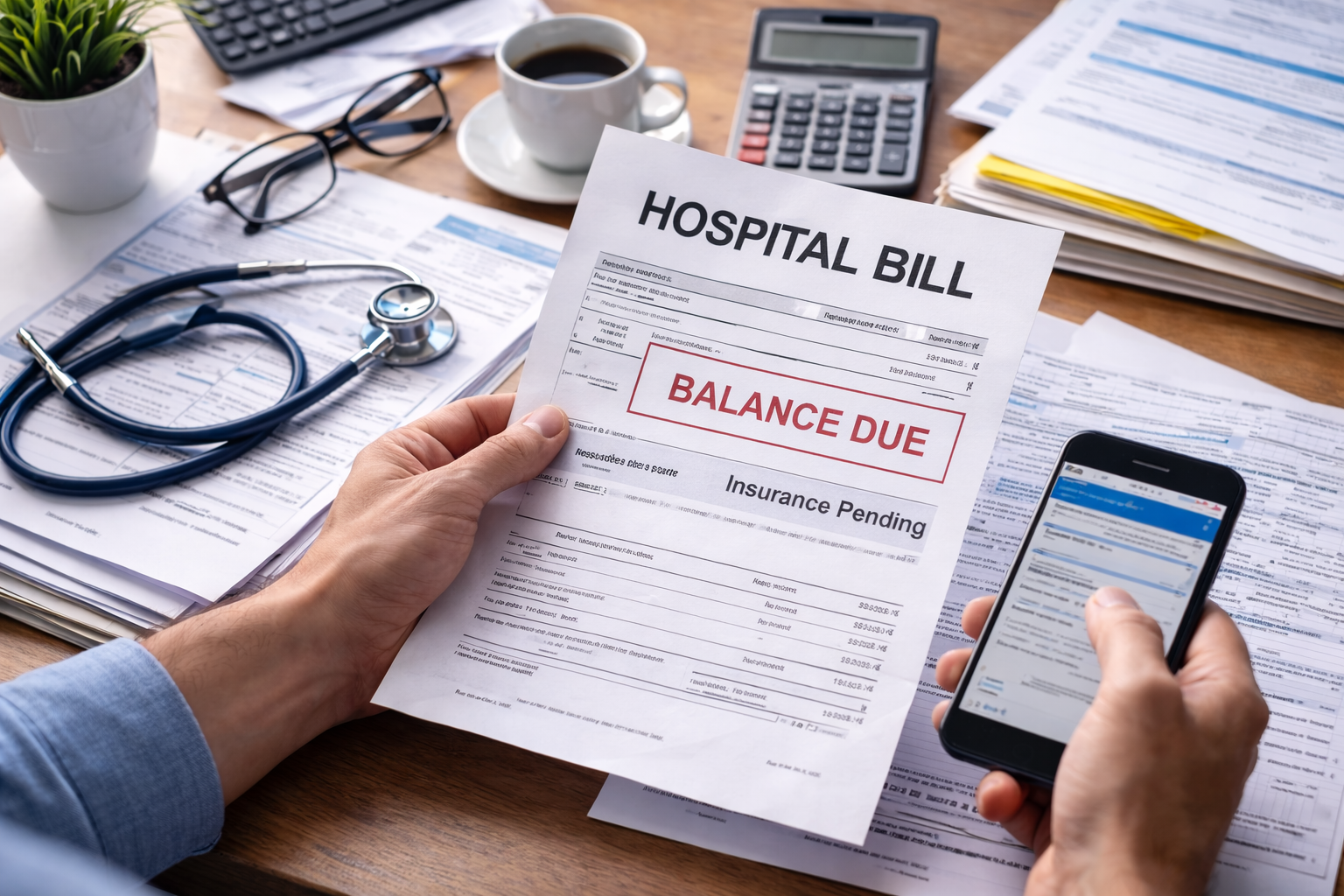
Hospital Billed Patient Before Insurance Claim Processed. That was the only explanation that made sense when the statement showed up in the mail before I had even seen the insurer finish reviewing the claim online. The hospital bill looked polished, final, and immediate. It listed a patient balance, a due date, and language serious enough to make it feel as if the account had already moved past the insurance stage. But the insurer portal still showed the claim as pending. That disconnect was the first sign something in the billing timeline had moved too fast.
Hospital Billed Patient Before Insurance Claim Processed is one of those medical billing problems that feels small at first and then gets dangerous if nobody stops it. A patient sees a balance and assumes one of two things: either the insurance denied the claim, or the hospital expects payment right away. Sometimes neither is true. Sometimes the statement is generated by an automated cycle that runs before the insurance adjudication process is finished. That matters because a temporary patient balance can turn into a bigger account problem if it is treated like a final amount too early.
If you want the broader system behind this kind of error, start with the main billing guide first because it explains how consumer billing problems move through automated account workflows.
Why this happens before insurance finishes
Hospital Billed Patient Before Insurance Claim Processed usually happens because hospital billing systems and insurance systems do not move at the same speed. The hospital creates a charge record as soon as the visit is coded and posted. The insurer, by contrast, may still be reviewing eligibility, checking claim formatting, applying contract rates, verifying medical necessity, or waiting for corrected coding. Those two systems are connected, but they do not always pause for each other.
In many hospitals, statements are generated on a timed cycle. That cycle may begin a set number of days after service, after discharge, or after the first claim submission. The billing system may create an early patient statement even though the insurer has not yet produced an Explanation of Benefits. So the statement is real in the sense that it came from the hospital, but the balance on it may still be incomplete, temporary, or subject to major revision.
The core issue is timing, not always denial. That distinction is what separates this article from a true denial article or an article about a balance that remains after insurance has already paid.
What the insurance side is still doing
Hospital Billed Patient Before Insurance Claim Processed becomes easier to understand once you look at the insurer’s internal steps. A claim is not simply received and paid. It usually moves through a sequence such as:
- claim intake and formatting checks
- member eligibility verification
- provider network status review
- coding edits and bundling checks
- medical necessity or authorization review when required
- contracted rate calculation
- patient responsibility allocation
- Explanation of Benefits generation
Any delay in one of those stages can leave the insurer portal showing “pending,” “received,” “in process,” or something similarly incomplete. Meanwhile, the hospital’s own statement cycle may still fire.
That is why Hospital Billed Patient Before Insurance Claim Processed can happen even when nothing has gone catastrophically wrong yet. The claim may simply still be inside the insurer’s normal workflow.
How to tell if the bill is premature or actually dangerous
Not every early statement is harmless. Some are just early. Some are early because something broke in the insurance submission. Some are the first sign that the account is drifting toward patient balance billing faster than it should. You need to identify which version you are looking at.
Checklist: signs the bill may be premature rather than final
- The insurer portal still shows the claim as pending or processing
- The statement date is very close to the service date
- The bill does not show a finalized insurance payment or denial reason
- The amount billed looks like the full gross charge rather than a contracted patient share
- The hospital cannot tell you the date the insurer adjudicated the claim
Warning signs the problem may be deeper
- The hospital says the claim rejected and never resubmitted
- The insurance information on the account is wrong or incomplete
- The claim was sent to the wrong plan or wrong payer
- The account already shows late notices or collection language
- The insurer says no claim is on file at all
If the insurer has not finished the claim and the hospital is already treating the balance like final patient responsibility, you need to slow the account down immediately.
Detailed situation branches
Hospital Billed Patient Before Insurance Claim Processed is not one single scenario. It splits into several practical branches, and each one should be handled a little differently.
Branch 1: The insurer portal says pending and the hospital confirms the claim was submittedThis is the cleanest version. The most likely cause is a statement cycle that moved before adjudication finished. Ask the hospital billing department to place the account on insurance hold, suppress further patient statements temporarily, and note the insurer claim reference in the account. Then monitor the insurer portal until the Explanation of Benefits posts.
Branch 2: The insurer portal shows nothing, but the hospital says the claim was sent
This suggests a transmission problem, wrong payer routing, claim rejection at intake, or delay before the insurer fully logged the claim. Ask the hospital for the submission date, payer name, and claim reference number. Confirm whether the claim was accepted or rejected electronically. If the hospital cannot confirm acceptance, the issue may not be timing alone.
Branch 3: The insurer shows the claim, but the insurance information on the hospital bill looks wrong
This often means the hospital billed under the wrong member ID, wrong group number, wrong plan, or outdated coverage record. In that situation the account may temporarily appear self-pay or underinsured. Correct the insurance details immediately and ask the hospital to rebill under the correct information.
Branch 4: The hospital says insurance denied, but you have not seen a denial
Do not rely on verbal summaries alone. Ask for the denial code or remit reason and compare it with the insurer portal or EOB. Sometimes staff say “denied” when the claim actually rejected for formatting or is still pending documentation. That difference matters because a correctable rejection is not the same as a final denial.
Branch 5: The hospital is already sending stronger notices
If the account is moving into late-stage statements, pre-collection notices, or aggressive payment language before the insurer finishes, you need account notes placed immediately. Ask for supervisor review and request that the account remain inactive for collection escalation while the insurance claim remains unresolved.
When the real problem is wrong insurance routing
Sometimes Hospital Billed Patient Before Insurance Claim Processed looks like a timing issue but is actually a routing issue. The hospital may have billed the wrong insurance plan, a secondary plan before the primary plan, an inactive plan, or an old employer plan. When that happens, the claim may reject quickly or sit unresolved, and the patient receives a statement that appears to assign personal responsibility too early.
If you suspect the claim went to the wrong payer, this related article is the closest supporting read because it addresses the insurance-routing layer directly.
This branch matters because a routing problem can create multiple downstream problems at once: early statements, duplicate claim submissions, delayed adjudication, and eventually even collection risk if no one corrects the payer sequence.
What the hospital billing department is trying to do
From the hospital’s side, Hospital Billed Patient Before Insurance Claim Processed often reflects revenue-cycle controls rather than a deliberate attempt to collect unfairly. Billing departments are measured on account movement, timely statement cycles, unresolved balances, and aging buckets. Their systems are designed to keep accounts active, not to wait quietly forever.
That does not mean the patient should ignore the statement. It means the patient should interpret it correctly. In many cases the hospital is not saying, “Insurance is done and you definitely owe this exact amount.” The system is saying, “There is currently an unresolved balance on the account and the standard statement cycle has triggered.” Those are not the same message.
Understanding that difference helps you respond strategically instead of emotionally.
What to ask the hospital right now
Hospital Billed Patient Before Insurance Claim Processed is easier to fix when you ask operational questions, not vague ones. Instead of asking only “Why did you bill me?” ask questions that reveal the claim’s exact stage.
- What date was the claim submitted to insurance?
- Was the claim accepted by the payer or rejected at intake?
- What payer was the claim submitted to?
- Does the account currently show insurance hold or self-pay status?
- Has an Explanation of Benefits posted to the account yet?
- Can you note the account to prevent escalation while the claim is pending?
- When is the next statement cycle scheduled?
Those questions force the billing department to identify whether the statement is simply premature or whether a more specific insurance failure is driving it.
What to ask the insurer
You also need the insurer’s side. If the insurer has no record of the claim, the issue may be submission failure. If the insurer has the claim but shows it pending, the issue may truly be early patient billing. If the insurer already processed it, then the hospital’s statement may be stale or based on an unposted update.
- Do you have the claim on file?
- What is the current claim status?
- Has the claim been adjudicated yet?
- Is additional information needed from the provider?
- Has an EOB been issued?
- What is the current estimated patient responsibility, if any?
Hospital Billed Patient Before Insurance Claim Processed often stops being confusing once you compare answers from both sides. One side may reveal that the bill is merely early. The other may reveal that the claim never moved correctly in the first place.
Mistakes that make this worse
Several common reactions turn a manageable billing timing problem into a larger account problem.
- Paying the full hospital bill immediately without checking claim status
- Ignoring the statement completely because you assume insurance will eventually fix it
- Failing to update wrong insurance details when you spot them
- Assuming a pending claim and a denied claim are the same thing
- Waiting until the balance reaches collections language before calling
Paying too early can create refund delays, credit balance confusion, and account misallocation. Ignoring it completely can allow the account to age into a more serious status. The right move is neither panic payment nor silence. It is controlled verification.
When this turns into a post-insurance billing problem
Sometimes the insurer eventually pays, yet the hospital keeps billing the patient anyway. That is a different problem from this article’s main topic, but it is the next logical branch if the claim has already finalized and the account still shows an unresolved balance. In that situation, the hospital may not have posted the insurer payment correctly, may still be waiting on an adjustment, or may be showing a stale balance.
If the claim later gets paid and the statement does not correct, this is the best next read before the account gets more complicated.
Your rights and your safe next move
Hospital Billed Patient Before Insurance Claim Processed does not automatically mean you owe the amount shown, and it does not automatically mean the hospital acted unlawfully. But you do have the right to understand whether the balance is final, temporary, or based on incomplete insurance processing. You also have the right to ask that the account be reviewed before being treated like true patient debt.
For an official explanation of how insurance payments appear before a patient bill is finalized, see the federal guide explaining Explanation of Benefits.
CMS – Understanding an Explanation of Benefits (EOB)
Key Takeaways
- Hospital Billed Patient Before Insurance Claim Processed usually reflects a timing mismatch between hospital statement cycles and insurer adjudication timelines.
- An early statement is not always a final patient balance.
- You need to confirm whether the insurer has the claim, whether it is pending, and whether the hospital account is on insurance hold.
- Wrong insurance routing can make an early bill look like a timing issue when it is actually a payer error.
- Fast verification is better than panic payment or complete silence.
FAQ
Why did I get a hospital bill before my insurance finished the claim?
Hospital Billed Patient Before Insurance Claim Processed often happens because hospital statements generate on automatic cycles before insurer adjudication is complete.
Does this mean my insurance denied the claim?
No. It may simply mean the claim is still pending. You need to verify the insurer status before treating the statement like a final bill.
Should I pay the full amount right away?
Usually not until you confirm the insurer has finished processing. Paying too early can create refund and posting problems later.
What should I ask the hospital to do?
Ask the billing department to review claim status, confirm payer submission details, and place the account on insurance hold if the claim is still pending.
What if the hospital keeps sending stronger notices?
Escalate within billing, ask for supervisor review, and document that the insurance claim is still unresolved so the account does not move forward improperly.
What to do now
Hospital Billed Patient Before Insurance Claim Processed can look like a straightforward demand for payment, but the real question is whether the claim has actually finished moving through the insurance system. That is the point you need to settle first. If the insurer still shows the claim pending, the balance on the hospital statement may not be the real final amount at all.
Call the hospital billing department today, confirm the claim submission details, ask whether the account is on insurance hold, and tell them not to escalate the balance while the claim remains unresolved. Then check the insurer portal or call the insurer directly to verify whether the claim is pending, rejected, or adjudicated. Do those two checks now, before the account ages into a more serious billing problem that becomes harder to unwind later.