
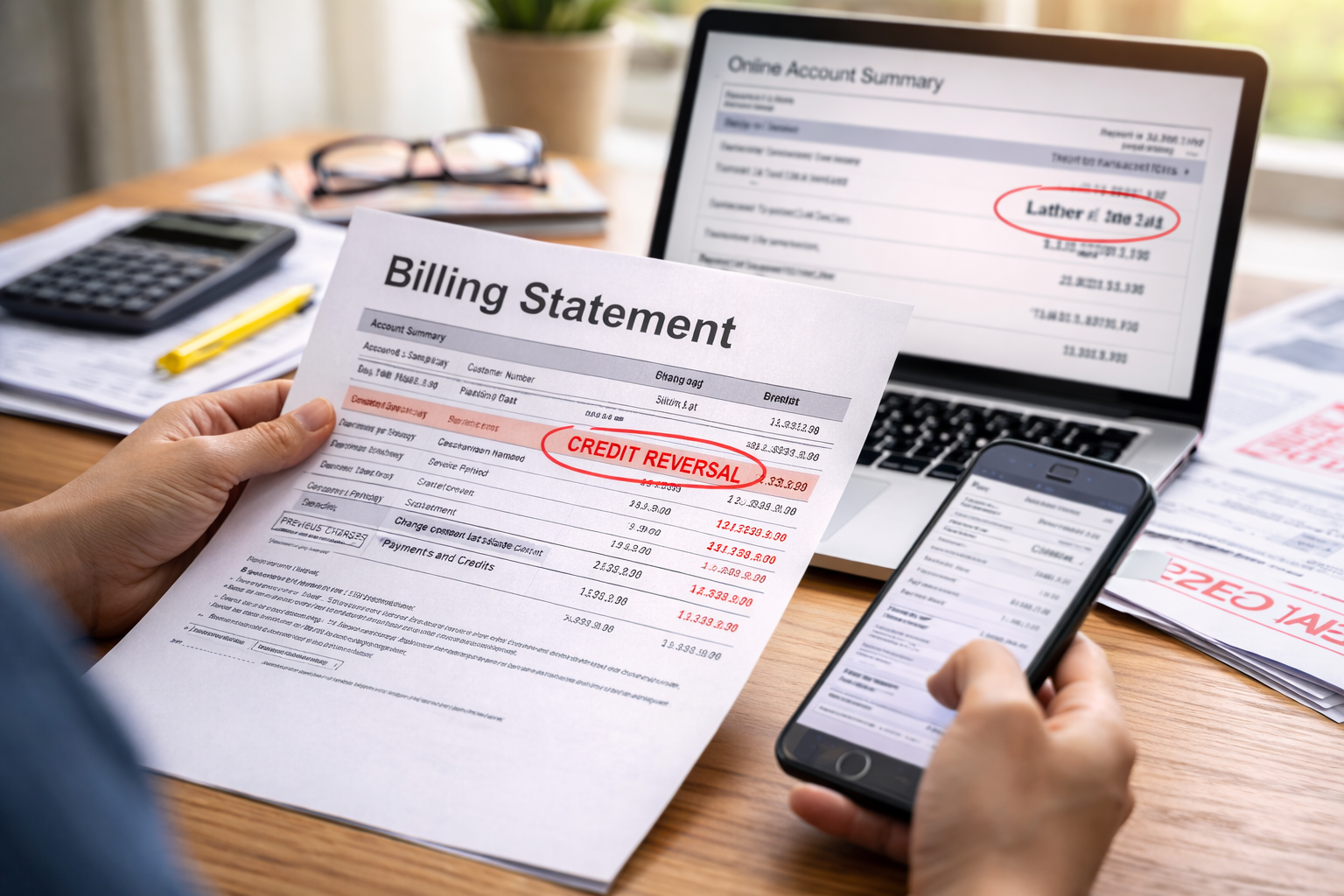
Billing Adjustment Reversed After Credit Was Applied was not something I expected to see again after the issue was already “fixed.” The dispute had been resolved weeks earlier. A credit showed on the statement. The balance finally looked correct. For a moment it felt like the problem was closed. Then a new billing cycle arrived, and the balance was suddenly higher again. The credit was gone.
Billing Adjustment Reversed After Credit Was Applied appeared quietly in the account history with almost no explanation. The system did not say the dispute was reopened. It did not say the credit was rejected. It simply showed that the adjustment had been reversed and the original charge was active again. That moment is when billing problems become dangerous, because a resolved dispute can quietly turn back into an unpaid balance.
To understand how credits and adjustments are normally applied inside billing systems, this breakdown explains how companies allocate payments and corrections internally.
Why credits sometimes disappear later
Billing Adjustment Reversed After Credit Was Applied usually happens when the credit was not the final step in the internal review process. Many billing systems issue temporary adjustments while the dispute investigation is still ongoing. From the consumer perspective the credit looks final. From the company perspective it may still be provisional.
Large billing platforms often have several internal stages. A customer support agent may apply a credit immediately to calm the dispute. Later the account may pass through an internal audit queue where another department reviews whether that credit should remain. If the audit determines that the adjustment was applied incorrectly, the system may automatically remove it.
This is why Billing Adjustment Reversed After Credit Was Applied can appear weeks after the issue seemed resolved.
What triggers a credit reversal inside billing systems
There are several internal triggers that can cause Billing Adjustment Reversed After Credit Was Applied to occur. These triggers are usually invisible to consumers because they happen during backend reconciliation processes.
- internal dispute review reopening the original case
- automated fraud or abuse monitoring
- duplicate adjustment detection
- billing reconciliation during monthly closing
- insurance or third-party payment recalculation
- subscription system corrections after plan updates
When these processes run, the system may flag credits that do not match the underlying billing logic. If that happens, the platform may reverse the credit automatically.
Situations where this problem appears most often
- Medical billing disputes temporarily credited before insurance reprocessing
- Subscription charges credited by support but reversed by automated billing rules
- Utility billing corrections reversed after meter recalculation
- Telecom billing disputes reopened during internal fraud reviews
- Refund adjustments removed during system reconciliation
Billing Adjustment Reversed After Credit Was Applied therefore does not always mean the company is intentionally taking back a credit. In many cases the system is reacting to a backend rule that reevaluates the original charge.
How companies view these reversals internally
From the company side, Billing Adjustment Reversed After Credit Was Applied may appear as a routine correction rather than a dispute. Internal billing systems track adjustments as accounting entries. If an entry violates internal rules, the system reverses it to maintain ledger accuracy.
This is particularly common in industries where billing must align with regulatory or contractual requirements. Healthcare billing, telecom contracts, and utility billing systems often run automated reconciliation checks that review previous adjustments.
When those checks run, the system may conclude that the original credit was applied incorrectly or prematurely. The result is Billing Adjustment Reversed After Credit Was Applied appearing in the ledger.
When a reversed credit becomes a real problem
The biggest risk appears when Billing Adjustment Reversed After Credit Was Applied restores a balance that is already past due. Many billing systems treat the restored amount as immediately payable. If the reversal happens after the billing cycle closes, the account may suddenly show an overdue balance.
This can trigger additional issues such as:
- late fees
- service interruption warnings
- collection referrals
- credit reporting
If the balance returns without explanation, it may feel like the company changed its decision. In reality the billing system may simply be completing a review that was never visible to the customer.
How to determine whether the reversal was valid
When Billing Adjustment Reversed After Credit Was Applied appears on your account, the first step is to review the full account history rather than only the current balance.
- date the original credit was issued
- department that applied the adjustment
- reason code attached to the credit
- date the reversal occurred
- whether a dispute case number existed
These details often reveal whether Billing Adjustment Reversed After Credit Was Applied was caused by an internal audit, an automated rule, or a reopened dispute.
Situations where disputes escalate further
In some cases the reversal may occur because the company determined that the original charge was valid. When this happens, Billing Adjustment Reversed After Credit Was Applied may indicate that the dispute investigation concluded against the consumer.
If that occurs, the account may move into the next stage of the dispute process. This internal escalation process explains how billing disputes move through review stages.
Mistakes consumers make after a credit reversal
Many people assume that the company intentionally removed a credit unfairly. While that sometimes happens, reacting too quickly can make the situation worse.
- paying the restored balance without asking why the credit was reversed
- opening a second dispute without referencing the original case
- ignoring the balance until it escalates further
When Billing Adjustment Reversed After Credit Was Applied occurs, the key step is understanding what triggered the reversal rather than assuming the dispute was handled incorrectly.
What to do immediately if the credit disappears
The safest response is to request clarification before making any new payments. Ask the billing department to explain the reason code associated with the adjustment reversal and whether the original dispute case was closed or reopened.
Billing Adjustment Reversed After Credit Was Applied often turns out to be a documentation issue rather than a final billing decision. In many situations the credit is restored once the original dispute evidence is reviewed again.
If the company insists the reversal was correct, the next step may be escalating the dispute through formal channels.
Recommended Reading
If a billing reversal causes a balance that should already have been resolved, the next step is understanding what to do when charges reappear after payment or adjustment.
Key Takeaways
- Billing Adjustment Reversed After Credit Was Applied usually occurs during internal billing audits.
- Temporary credits may be reversed if the dispute review determines the charge was valid.
- Automated reconciliation systems often trigger these reversals.
- Consumers should review the full account history before responding.
- Clarifying the reversal reason is critical before paying the restored balance.
FAQ
Why would a billing credit disappear?
Billing Adjustment Reversed After Credit Was Applied usually happens when internal billing systems determine that the original adjustment violated accounting rules or was issued before a dispute investigation finished.
Does this mean the dispute was denied?
Not always. Sometimes the reversal occurs while the case is still under review or being transferred to another department.
Can the credit be restored?
Yes. If the original dispute evidence supports the adjustment, the billing department may reapply the credit after review.
Should I pay the restored balance immediately?
In most situations it is better to confirm why the credit was reversed before paying the new balance.
What to do right now
When Billing Adjustment Reversed After Credit Was Applied appears on your account, the safest step is requesting a full explanation of the adjustment history before the balance escalates further.
Ask for the reason code behind the reversal and confirm whether the dispute investigation has actually been completed.
Clarifying the adjustment history early prevents a temporary billing correction from turning into a long-term dispute or collection problem.
For official consumer billing dispute guidance, see the Federal Trade Commission dispute guidance here:
FTC consumer billing dispute guidance.