
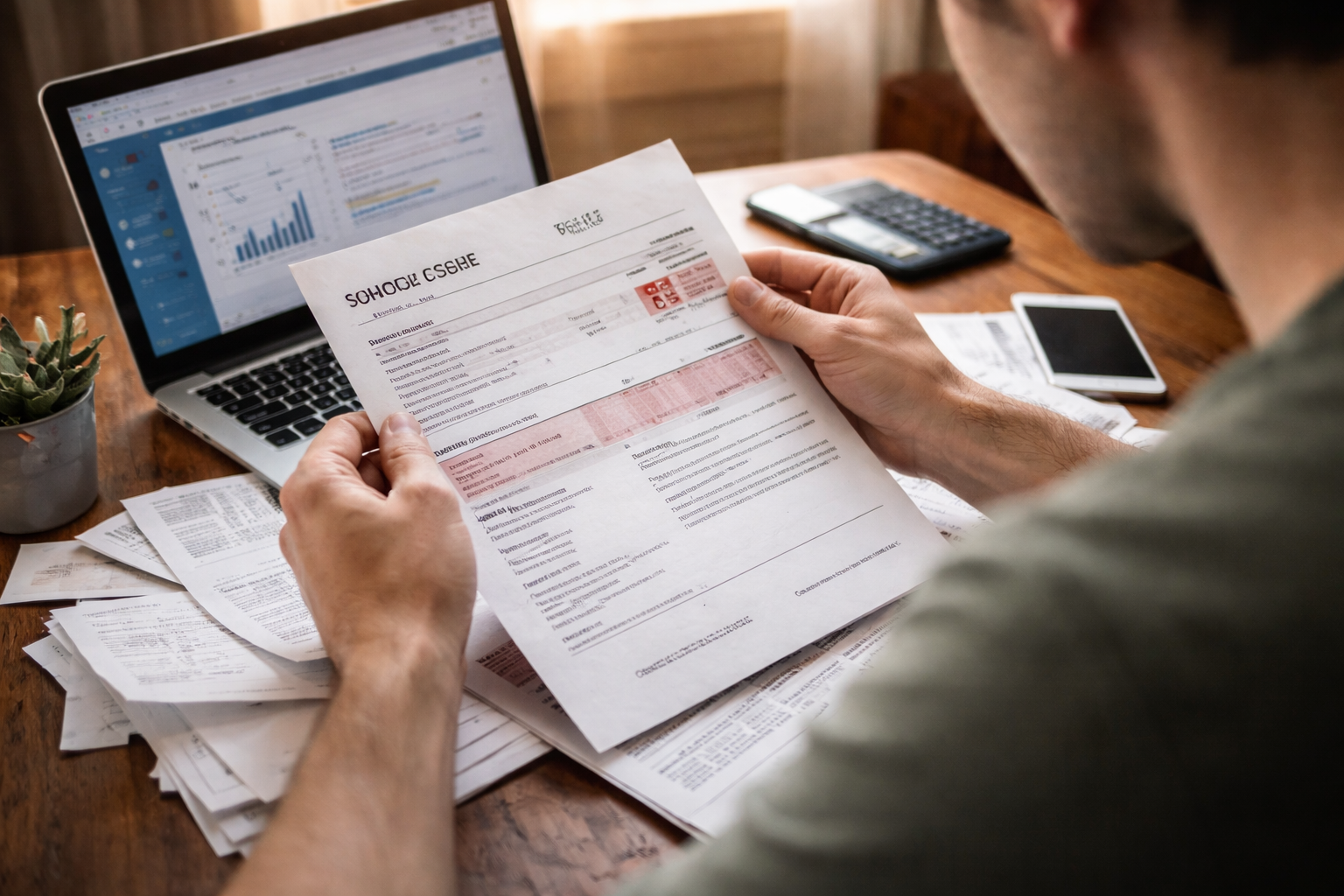
electric bill unusually high what to do was the exact phrase I typed after I opened my utility app and saw a total that didn’t match reality. I didn’t change apartments. I didn’t buy a new appliance. I didn’t suddenly start mining crypto. It was just… higher. High enough that I reloaded the page to make sure it wasn’t a glitch.
I stared at the due date and felt that quiet kind of stress that doesn’t look dramatic but steals your focus anyway. The worst part is the uncertainty: is this a real usage problem—or a billing problem? If you’re in that moment, this guide is for you.
Start Here: 3-Minute Reality Check
Before you call anyone, do this fast triage. It prevents wasted time and gets you answers quicker.
- Step 1: Compare the billing period days (28 vs 35 days can change everything).
- Step 2: Find the kWh used this month vs last month (not the dollar amount).
- Step 3: Check whether the bill says “estimated” or “actual” reading.
- Step 4: Look for rate plan changes (TOU, tiered, seasonal adjustments).
If kWh is similar but dollars jumped, it’s often rates/fees. If kWh jumped, it’s often usage or a reading problem.
The 6 Most Common Reasons Bills Spike
When I searched electric bill unusually high what to do, I kept seeing vague advice like “use less energy.” That’s not helpful when you need to know what actually happened. Here are the real-world causes utilities see again and again:
- Estimated readings: The utility guessed your usage, then “true-up” hits later.
- Rate increases: Your price per kWh rose, sometimes quietly.
- Seasonal usage: HVAC changes (heat waves/cold snaps) can double kWh.
- Time-of-use penalties: Running AC/laundry during peak hours costs more.
- Appliance drift: A failing water heater, fridge, or HVAC can spike usage.
- Billing errors: Wrong meter number, data entry mistakes, duplicate line items.
You don’t need to guess. You need to isolate which bucket your bill belongs to.
Utility Company View: What They Check First
Utilities tend to treat “high bill” calls as one of two categories: (1) “usage increased,” or (2) “bill is wrong.” Their systems are designed to quickly defend category (1), so your job is to bring clean evidence that points to category (2) if that’s what happened.
When a representative pulls up your account, they typically can see:
- historical kWh trends
- meter read type (estimated vs actual)
- rate plan and any recent changes
- service notes (outage restorations, meter work, move-in/out flags)
If you call with only “it’s too high,” you’ll get a generic answer. If you call with “kWh doubled and the bill shows estimated,” you’ll get action.
Your Rights: What You Can Ask For (Without Sounding Aggressive)
For most customers, the fastest progress happens when you request specific actions instead of debating fairness. If you’re thinking electric bill unusually high what to do, these are reasonable, standard requests:
- Ask if the reading was estimated and request an actual read if possible.
- Request a meter re-read (or a review of the meter number on file).
- Ask for a high-bill investigation (many utilities have a process).
- Request a payment plan while the bill is being reviewed (to avoid shutoff stress).
- Ask for itemization of fees, riders, and rate changes.
You are not asking for a favor. You are asking for verification.
Do This Today: A Step-by-Step Action Plan
Here’s the exact sequence that helps you move fast while staying calm and organized.
- Within 30 minutes: Screenshot the bill details (kWh, dates, read type, rate plan).
- Within 2 hours: Compare to last month’s kWh and billing days (same season if possible).
- Same day: Call or chat and request “estimated vs actual” confirmation + investigation.
- Same day: Ask what documentation they need and write it down (name, ticket #, deadline).
- Before the due date: If under review, ask about temporary payment options or a hold.
electric bill unusually high what to do becomes a lot clearer when you treat it like a short investigation instead of a long argument.
Case Branch: Pick Your Situation and Follow the Matching Path
Use this “match-and-move” block to stop scrolling and start acting.
- Case A (kWh normal, dollars higher): Ask about rate plan changes, seasonal rates, added fees. Request itemization.
- Case B (kWh higher, weather extreme): Check HVAC runtime, thermostat settings, and filter status. Ask about peak-hour pricing.
- Case C (bill says estimated): Request actual meter read and correction. Ask when true-up applies.
- Case D (sudden spike, no lifestyle change): Suspect appliance drift or meter issue; request high-bill investigation.
- Case E (moved recently / new account): Confirm move-in date, meter number, and whether prior tenant usage leaked into your period.
- Case F (line items look duplicated): Treat it like a billing error—request correction and written confirmation.
When I was stuck on electric bill unusually high what to do, this branching approach was the first thing that made the situation feel controllable.
If You Suspect a Billing Error
Billing errors happen more often than people think, but they’re usually fixed only when you describe the error clearly. Use a simple script like:
“My bill is unusually high and I’m requesting verification of (1) meter read type, (2) meter number on file, and (3) any duplicated charges or corrected adjustments.”
If your bill looks like you were charged twice rather than simply high usage, this related guide may fit your situation better:
One Reliable Official Resource (Worth Checking)
For a neutral, official overview on staying eligible and understanding billing/usage patterns, this resource is a safe reference point. It helps you confirm whether the spike is likely usage-driven or needs investigation.
Use it as a cross-check—not as a substitute for disputing a suspected billing mistake.
Mistakes That Make High Bills Harder to Fix
- Paying immediately without capturing screenshots or reading details
- Calling angry without asking for read type (estimated vs actual)
- Arguing about the total instead of discussing kWh and billing days
- Ignoring the due date while waiting for “someone to call back”
electric bill unusually high what to do has a “clock” attached to it: the due date. You can investigate and still protect yourself by setting a payment plan or getting a review ticket created.
Key Takeaways
- Start with kWh and billing days, not the dollar amount.
- Estimated reads and rate changes create “sudden” spikes without lifestyle changes.
- Utilities respond faster to specific requests: read type, meter number, investigation ticket.
- If it looks like an error, document everything and request written confirmation.
FAQ
How do I know if my bill is estimated?
Many bills label it as “estimated” or “actual.” If you can’t find it, ask customer service directly.
Should I pay the bill first and dispute later?
It depends on shutoff risk and your utility’s policy. If you dispute, try to at least open a formal investigation ticket and ask about payment arrangements.
Can a faulty appliance really double usage?
Yes. A failing HVAC component, water heater issue, or old refrigerator can run longer than you notice.
electric bill unusually high what to do if nothing changed at home?
Treat it as a verification problem: confirm meter read type, billing days, meter number, and request an investigation.
The moment I realized my bill wasn’t “a little higher” but truly out of range, I wanted one clear answer. There wasn’t one answer—there was a process. And the process worked once I stopped guessing and started checking.
If your bill is unusually high, don’t wait for the next cycle to “average it out.” Take screenshots, compare kWh and billing days, contact the utility with specific verification requests, and open an investigation ticket today. That’s how you turn a confusing spike into a solvable case.